
 Netherlands
 Belgium
 Denmark
 Germany
 France
 United States
 Austria
 UK
 Spain
 Italy

A local number in every market
Travelers call a number from their own country, and the call reaches your team.
International numbersYour customers call from their own country and their own time zone, and during a strike or severe weather they all call at the same moment. With a local number in each market they pay a local rate, while the call reaches the team that is awake at that moment. Travel agencies, tour operators and hotels manage all their inbound numbers in one cloud-based phone system.

Travelers call a number from their own country, and the call reaches your team.
International numbers
When a flight is canceled, you put an announcement up front. Callers hear right away what is going on.
Phone menu (IVR)This is the setup we build most often for a travel company or tour operator with customers in several countries. You can take parts out or add them; the order of the steps is what makes it work.
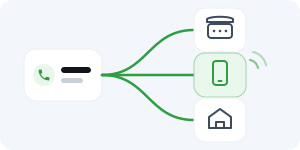
Customers call a local number in their own country, at a local rate and without international call charges. All numbers come in on the same platform and go to one central team, wherever it is based.
A phone menu (IVR) by language sends every caller to the team or recorded message in their own language.
“Press 1 for English, 2 for French, 3 for German.”
When the workday ends in London, time-based routing sends calls to your team in New York, and when New York closes, to Sydney or wherever else you have people. You set the schedule once, so nobody has to switch anything over by hand.
When all agents are busy, the caller waits in the queue and hears an announcement you write and update yourself with the text-to-speech assistant. During a disruption you make the queue larger, so it holds more callers.
If a flight is canceled, you change the menu so urgent rebookings stay separate from general questions.
“Press 1 if your flight has been canceled or delayed, press 2 for other questions.”
Recorded information or a voicebot answers the most common questions: rebooking options, delay updates and how to claim compensation. Anyone who needs personal help leaves a voicemail, which reaches your support team by email.
General questions go to your own team. If the queue fills up, the overflow goes to a backup team.
You change the announcement, the queue and the menu yourself in the dashboard: you type what callers should hear and the text-to-speech assistant turns it into a spoken message, without recording anything or calling us. The change applies right away.
Extra staff for the busy season. In the booking season you add travel agents and front desk staff to your call team in the dashboard, with no hardware or installation, and remove them again when the season is over.
Takes a high volume of bookings from customers all over Europe and has a local number in every major market. All incoming calls go to one central call center. Through our API they pull call volumes by country, peak times and missed calls into their own software.
What decided it: customers call a local number at a local rate, while everything is handled by the existing team, without offices abroad or separate phone systems.
Organizes guided walking tours in the Canary Islands. The owner lives in a remote area with no mobile coverage, so all incoming booking calls arrive over VoIP on the Linphone softphone, via a Starlink internet connection.
What decided it: no mobile signal is needed, so with a satellite connection the owner can take calls anywhere.
We run our own IVR platform and are a licensed telecom operator in 14 European countries. When a flight is disrupted and your callers need a different message, the team that runs the platform makes the change.
A disruption message or new routing, set up by our own team.
That is why your booking line becomes a disruption line within minutes.
A phone menu, call queue, opening hours and call recording on a local number abroad start with the Customer Service plan: €49 a month, or €490 a year. For a voicebot, a link to your booking system or numbers in several countries, we plan the setup with you in one conversation; see custom solutions.

Want to talk it over first?
Our team helps you with numbers and voicebots in each of our countries. Call us or use the contact form.
Go to the contact form → From any country +31 85 400 5588A cloud-based phone system for travel agencies, tour operators and hotels that brings local numbers in several countries together on one platform. Call routing by language, time zone and topic sends each traveler to the right team, and you change announcements and menus yourself during a disruption. Calls ring on the mobiles, desk phones or VoIP phones your team already uses.
Within minutes, in the dashboard. With text-to-speech you add an announcement with the latest situation, make the queue larger, change the menu so urgent rebookings stay separate from general questions and send the overflow to a backup team.
The phone menu and, if you have one, the voicebot answer the most common questions: rebooking options, delay updates and how to claim compensation. Callers who need personal help leave a voicemail, which arrives by email, so your support team can work through the messages instead of every passenger waiting in the queue.
Yes. Time-based routing sends calls to the right office based on local working hours, so customers reach a team that is at work, wherever they call from.
With call queues, overflow rules and voicemail as a fallback. You can also add temporary staff to your call team in the dashboard and remove them when the season is over.
Yes, for the reservations line, the front desk and guest services. Your hotel numbers get a phone menu, queue and opening hours, and calls ring on the phones your staff already use. The phones in guest rooms stay on your existing in-house system, and we can forward calls to it.
Yes. Calls can be forwarded to your phone system, a SaaS tool or mobiles, so team members are reachable wherever they are. Forwarding to a phone in another country has its own per-minute rate.
With routing rules, menu options or forwarding by adviser or region, all under one number. As the team grows, you add advisers in the dashboard.
Yes. A new number is live within one business day and can be switched off when you no longer need it, which suits seasonal campaigns, one-off events and temporary booking lines.
Through a local number in their own country. We supply local numbers in dozens of countries, and the call goes to your team wherever it is based, so the caller pays a local rate.
Yes. With our API or a webhook you log calls against customer records, start actions when a call comes in or sync call data with your CRM or booking platform, for call analytics in your own tools. An integration with the travel platform you use is quoted separately.
Yes. Instead of pressing keys, callers simply say what they need, and our voicebot understands them in 99 languages. It answers questions about check-in times, baggage allowance, cancellation policy or the route to a hotel, and hands the call to your team when the caller needs personal help. The voicebot costs €49 a month plus €0.35 per minute it talks, on top of Phone System, with no setup fee, and is usually set up within two business days.
No. CallFactory is a licensed operator in 14 European countries and supplies numbers in other countries through partners, so you have one supplier, one invoice and one dashboard however many countries you expand into. That is also how we grew: our customers moved into new markets and asked us to follow them with local numbers.
Yes. Our support mailbox is monitored around the clock, in the evening, at night and on weekends, so you can reach us whichever time zone your travelers are in. Every customer gets this support, without a separate SLA.

Our team helps you with numbers and voicebots in each of our countries. Call us or use the contact form.
 European Union
GDPR-compliant · data in the EU
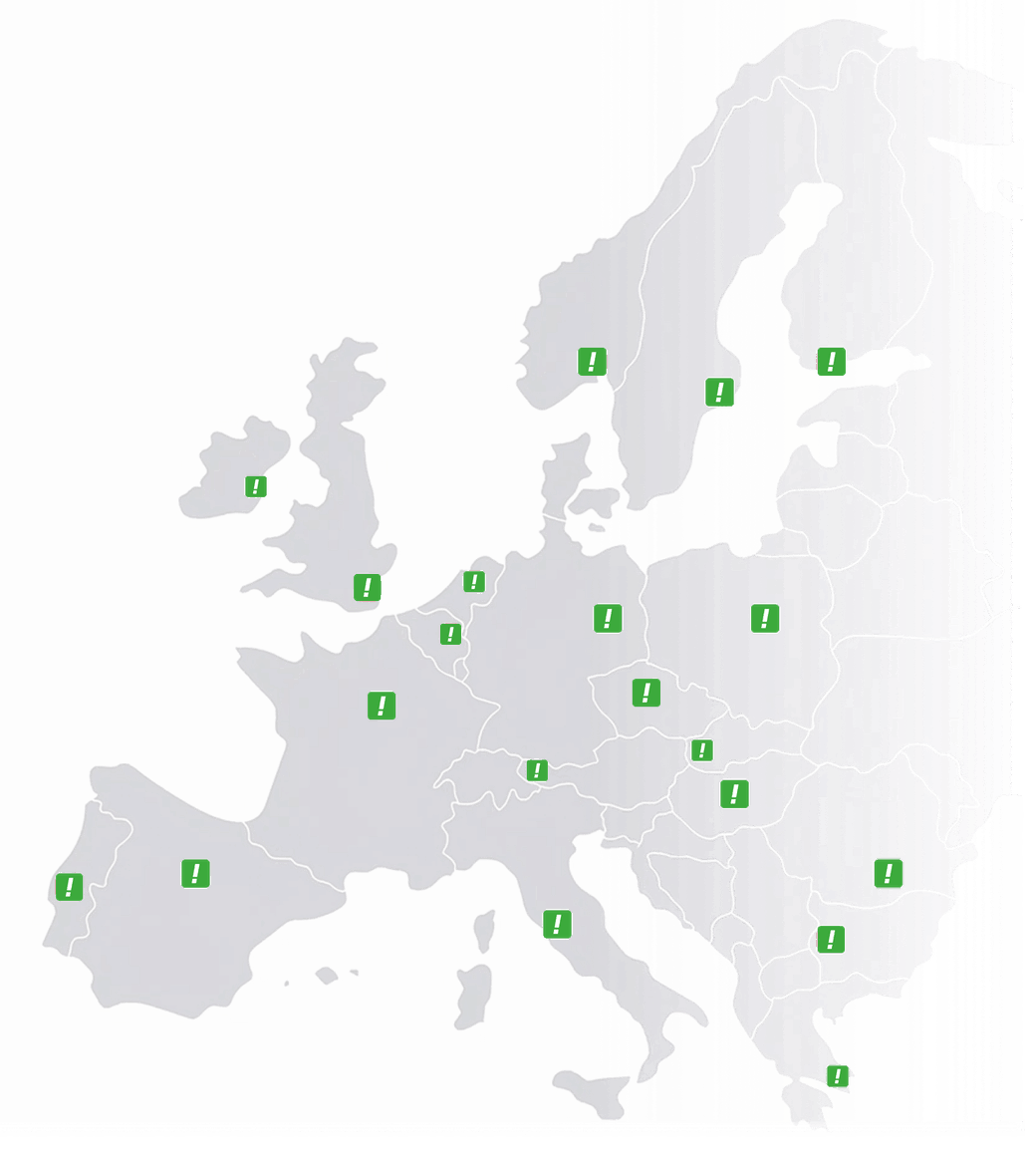 Licensed in 14 European countries