
 Netherlands
 Belgium
 Denmark
 Germany
 France
 United States
 Austria
 UK
 Spain
 Italy

Every caller at the right department
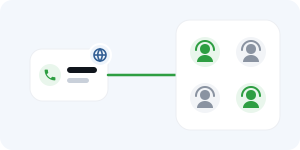
A phone menu for each department, with a welcome message that already gives the latest information.
Phone menu (IVR)Residents call about trash pickup, permits or a pothole and need to reach the right department. Outside office hours the officer on duty has to be reachable, and during an incident the whole neighborhood calls at once. Those are three different jobs for one municipal phone system, and each has to work the moment it is needed.
A phone menu for each department, with a welcome message that already gives the latest information.
Phone menu (IVR)
For services that run at night and on weekends, the call goes to the colleague who is on call.
On-call serviceThis is the setup we use most for a municipal contact center, with an information line and on-call routing alongside it. You can take parts out or add them, and each department can have its own version.
You include opening hours, services or new rules in the welcome message, so callers have part of their answer before anyone picks up and your staff get fewer calls.
“Welcome to the City of Riverside. City Hall is open until 5 pm today.”
A well-structured phone menu (IVR) sorts callers before they reach a person and puts them straight through to the right team, so fewer calls need transferring. On request, departments or employees also get a 3- or 4-digit extension behind the menu.
“Press 1 for waste and recycling, press 2 for housing, press 3 for planning, press 4 for other questions.”
Each department has its own call queue with a waiting message and its own opening hours, so the caller reaches the team that can answer their question.
These go to the general desk of the contact center. If your municipality already runs a contact center, we work alongside your existing phone system as an overflow layer, a backup or a replacement for specific departments.
Residents can leave a message at any time, and it goes to the department it belongs to. Someone who calls at 10 pm about a pothole leaves a message that reaches the streets team first thing the next morning, rather than a general inbox.
Social care crisis services, housing repair lines and noise complaint lines have to reach the right person at 2 am on a Sunday, not an empty office. The call goes straight to the mobile of the officer on duty over the mobile network, with no internet connection needed. Officers sign in or out on the team dashboard, so a last-minute schedule change applies immediately.
Planning applications, road work and changes to local services set off a wave of calls from residents who want to know what it means for them. A separate line with a recorded message answers most of those questions. You make the message with the text-to-speech assistant, so your team can update it at any time.
“Press 1 to speak to an officer, press 2 to leave a message and we will call you back.”
During a flood, a reported gas leak or a public health incident, you need a phone line fast. That is why we keep emergency numbers in reserve, which are usually live within a few hours. You make the welcome message with the latest information on the spot with text-to-speech, and the calls go to your incident response team.
As the situation develops, you update the message yourself with new instructions, a revised timeline or different contact details, without calling us. If call volumes rise, the queue and overflow rules keep callers on the line or send them to another team, so they do not hear a busy signal.
We run our own IVR platform and are a licensed telecom operator in 14 European countries. When public services depend on your phone lines being reachable, the team that runs the platform handles every change and every outage.
A change to the incident line, made by our own team.
That is why an emergency number from the reserve is usually live within a few hours.
The department menu, call queues and call recording start with the Customer Service plan (up to 8 people): €49 per month. For a setup with several departments, locations or an incident line, we plan the details with you in one conversation.

Want to talk it over first?
Our team helps you with numbers and voicebots in each of our countries. Call us or use the contact form.
Go to the contact form → From any country +31 85 400 5588A phone system that routes calls from residents to the right department of a municipality or government agency. It combines a welcome message, a phone menu for each department, call queues, opening hours, voicemail and on-call routing, and it can add a separate incident line when something happens. Ours runs on our own platform and rings on the phones your employees already use.
Yes. If your municipality already runs a contact center, CallFactory works alongside your existing phone system as an overflow layer, a backup or a replacement for specific departments.
Callers wait in the queue with a waiting message until someone from the incident team is free, instead of hearing a busy signal. A recorded message with the key facts means many of them no longer need to speak to anyone, and overflow rules can send calls to a second team.
Yes. You create a clear phone menu with spoken options that sends callers straight to the right team, so they wait less and are transferred less often.
Usually within a few hours. We keep emergency numbers in reserve for exactly this. You make the welcome message with our text-to-speech assistant, and calls go to your incident team. We activate first and sort out the paperwork afterward.
Calls are forwarded to the duty officer’s mobile over the phone network, with no internet connection needed. Officers sign in and out on the team dashboard, and a last-minute schedule change applies immediately.
Yes, in the dashboard at any time. You change opening hours, make new announcements with text-to-speech or adjust the routing during events, closures or incidents.
Yes. We put your purchase order number on every invoice, and you can be invoiced by number or department. For shared services, we invoice each organization separately.
Yes. We go through your current telephony setup with you, find numbers that are no longer used and bring the rest together on one platform, in one dashboard. Porting a number to us is free and takes at most five business days.
With clear phone menus in plain language, voicemail after hours and, if you want one, a voicebot that helps callers with common requests and puts them through to a person when needed. For many residents the phone is still the main way to reach public services, so the line has to be simple to use.
No. Calls ring on the mobiles, landlines and desk phones your employees already use, or on your existing phone system. Calls to mobiles go over the mobile network, so no app or internet connection is needed.
Yes. We have helped public sector organizations stay reachable since 2001. We build and maintain public information lines, emergency lines, lines for municipal services and routing between departments, and as a licensed operator in 14 European countries we know the telecom rules those lines have to meet.
The department menu, call queues and call recording come with the Customer Service plan: €49 a month or €490 a year for up to 8 people. For more departments or people we put together a custom plan. Calls on local and national numbers in the 14 European countries where we are licensed are included with normal use; prices exclude VAT.
Yes. Our support mailbox is monitored around the clock, in the evening, at night and on weekends, which matters when public services depend on your lines. Every customer gets this support, without a separate SLA.

Our team helps you with numbers and voicebots in each of our countries. Call us or use the contact form.
 European Union
GDPR-compliant · data in the EU
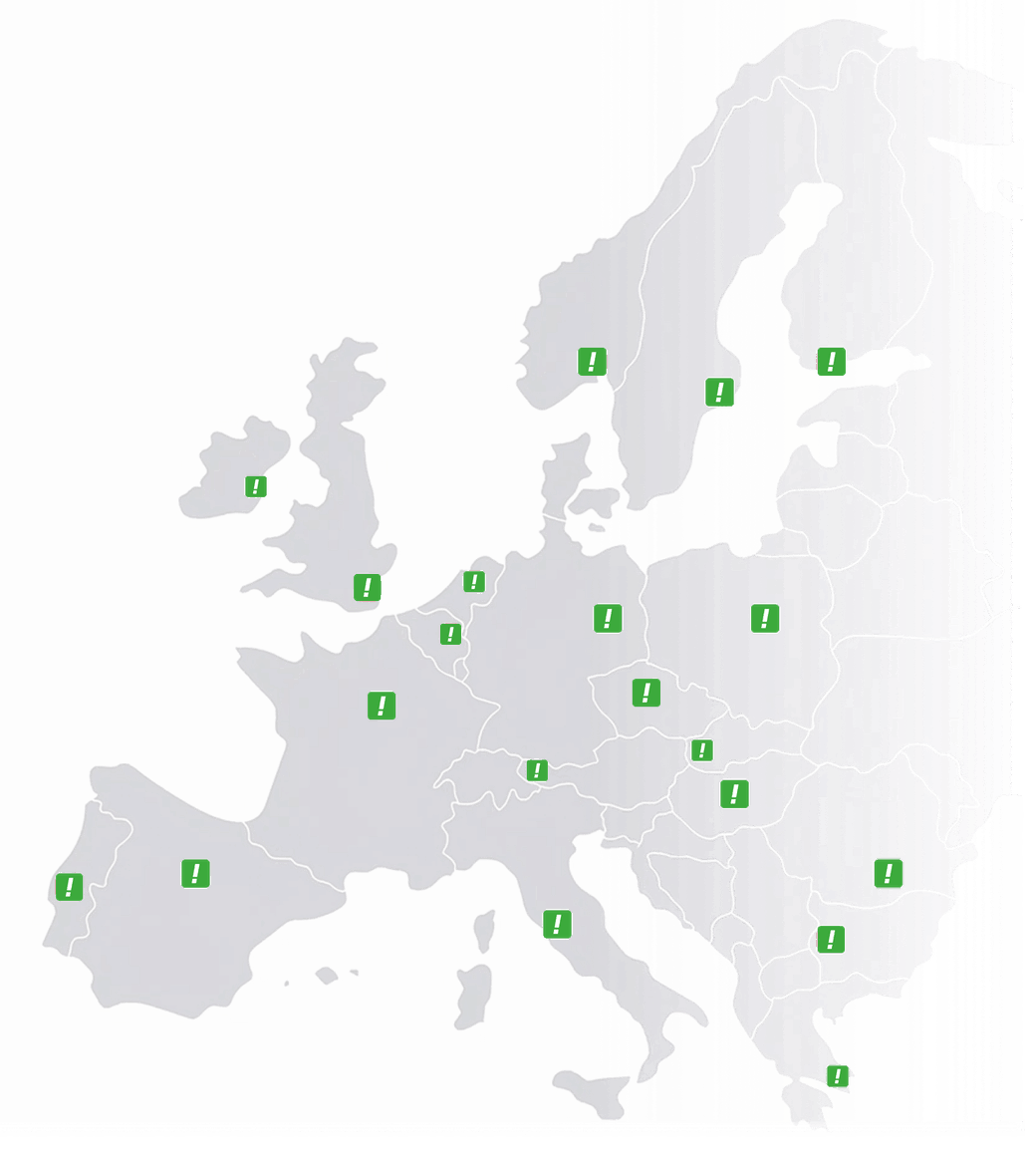 Licensed in 14 European countries