
 Netherlands
 Belgium
 Denmark
 Germany
 France
 United States
 Austria
 UK
 Spain
 Italy

The morning rush without a busy signal
A queue and a phone menu: information comes from a recorded message, everyone else waits in the queue for reception, and urgent calls go straight through.
Phone menu (IVR)Who is on call changes every day, somebody has to answer after hours, and at eight in the morning all patient calls arrive at once. Those are three different problems on one phone line, and our healthcare phone system has a part of the setup for each of them.

A queue and a phone menu: information comes from a recorded message, everyone else waits in the queue for reception, and urgent calls go straight through.
Phone menu (IVR)
One number for emergencies, even at night and on weekends. The call goes to the vet who is on duty.
On-call serviceThis is the setup we use most for a medical office, a clinic or an emergency line. You can take parts out or add them; the order of the steps is what makes the call routing work.
When there are more callers than can be connected, the caller joins the queue and hears a waiting message. When it is quiet, they are put straight through and never hear the queue.
So the caller knows right away that they have come to the right place.
“Welcome to the 24-hour service of Linden Family Practice.”
One question, two routes. This is what reduces the number of calls that reach reception.
“Press 1 for health information, press 2 to speak to a clinician.”
Recorded by your own team or by a voice actor. You can also use the text-to-speech assistant and update the message yourself when opening hours change, with no studio and no waiting.
The routing checks who is signed in on the on-call page at that moment and calls that person. If they do not answer, the call goes to the next person in the chain.
Different in the daytime than in the evening, and different again on the weekend. You set it up once, and after that the routing follows the clock.
There is a separate on-call page for healthcare. Staff sign in or out and the routing follows immediately, so nobody has to check a shared calendar or group chat to see whether a change has been picked up.
Calls over the mobile network. The call comes in on the staff member’s mobile over the mobile network, not over the internet, so it does not depend on a data connection or on a notification arriving in time. Forwarding to an existing handset or phone system is possible too.
Several emergency lines and blood transfusion hotlines run on our platform. Hospital staff change which doctor is on call themselves, day or night, on weekdays or on the weekend.
What decided it: incoming calls do not run over the internet; they go straight to the mobile of the doctor on duty.
Runs a shared emergency line at night and on weekends together with other practices. Wherever a pet is registered, there is always a vet on duty.
What decided it: every vet has their own login and sets their own availability, and schedule changes apply right away.
A Dutch helpline staffed entirely by volunteers, sometimes up to fifty at once, who together form a virtual call center from their own homes.
What decided it: each volunteer adds their own number in the dashboard when they are available, so the routing knows who is on duty.
We run our own intelligent IVR platform and are a licensed telecom operator in 14 European countries. When you need a change or something does not work, the same team that runs the platform looks into it and makes the change. In healthcare, where patient care depends on reaching the right person, that is the whole point.
A change to the emergency line, made by our own team.
The people who run the platform handle it themselves.
A medical office phone system with call queues, the phone menu and call recording starts with the Customer Service plan (up to 8 people): €49 per month. For an on-call setup with several departments, we plan the details with you in one conversation.

Want to talk it over first?
Our team helps you with numbers and voicebots in each of our countries. Call us or use the contact form.
Go to the contact form → From any country +31 85 400 5588A phone system that routes patient calls for a medical office, clinic or hospital department. It combines a welcome message, a phone menu, a call queue, opening hours and on-call routing behind one number, so routine questions get a recorded answer and urgent calls reach the clinician on duty. Ours runs on our own platform and rings on the mobiles and landlines your staff already use.
No. The call arrives as a normal call on the mobile, over the mobile network, so no internet connection is needed. That is why LUMC chose this setup.
Someone signs in or out on the on-call page, and the routing follows right away. There are no forwarding numbers that someone has to update every week. The page about the on-call service explains how an on-call number works.
The call goes to the next person in the chain you have set up. You decide how long it rings and who is next.
With a queue and a phone menu. The queue keeps every caller on the line with a waiting message, so there is no busy signal. The menu, or a voicebot, takes routine requests such as prescription refills and doctor’s notes, so mainly the calls that need a receptionist reach the front desk.
Tell us what callers should hear and where calls should go. We set up the number, the welcome message, the menu and the on-call routing for you. A new healthcare line is usually live within a few hours, and in an emergency we try to do it faster.
Yes. When a medical emergency number is needed urgently, we put the number live and route the calls first, and sort out the paperwork and billing once everything is under control. For unexpected incidents or a sudden surge in demand, we also keep emergency numbers in reserve, which are usually live within a few hours.
In most cases they can all move to our platform, into one dashboard and onto one invoice. Porting is free and takes at most five business days per number, and each number keeps working with the old provider in the meantime. We go through the existing setup with you before you cancel anything.
No. Incoming calls go to staff mobiles over the mobile network, and staff set their availability in the dashboard. You can also connect desk phones, or we forward calls to your existing phone system or a SaaS tool instead.
Yes. Each volunteer sets their own number and availability in the dashboard, so the routing knows who is on duty. Narcotics Anonymous in the Netherlands runs its helpline this way, sometimes with fifty volunteers at once.
Yes. The pharmacist on duty signs in on the on-call page, and calls to the weekend number go to them, routed by time. The same works for medical, vet and dental practices.
Yes. We run critical lines that are answered day and night, with automatic escalation to the next person if the first contact does not answer. The lines run on our own platform, which our own team monitors.
Yes, with the Customer Service plan. Call recording covers incoming calls, recordings are kept for up to 30 days by default and stored in the EU, and only the account administrator can listen to them and download them. That keeps patient information in as few hands as possible.
Yes. Our support mailbox is monitored around the clock, in the evening, at night and on weekends, and every customer gets that support without a separate SLA. If a volunteer has lost their password or an on-call schedule needs changing at midnight, someone on our side can help.

Our team helps you with numbers and voicebots in each of our countries. Call us or use the contact form.
 European Union
GDPR-compliant · data in the EU
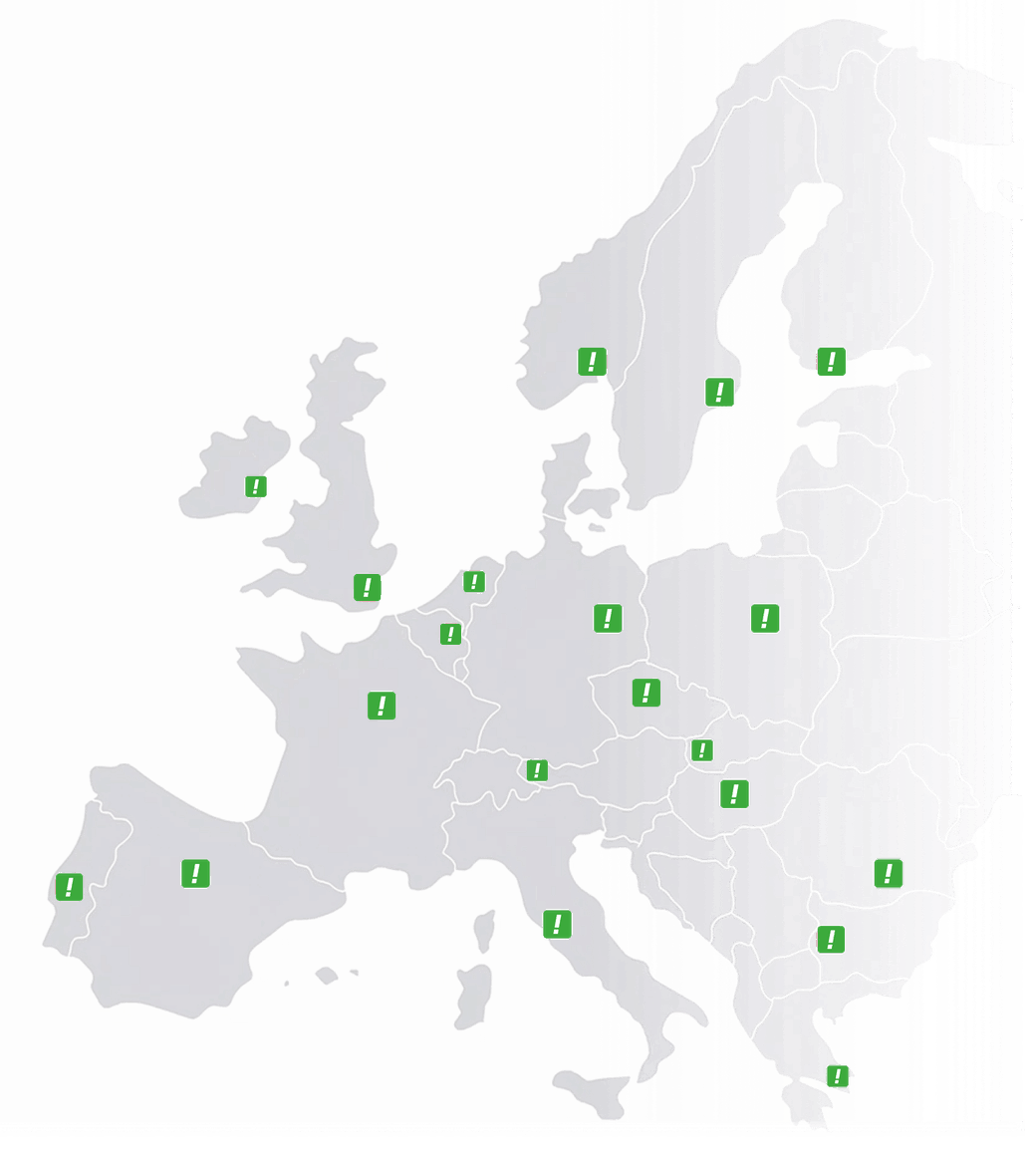 Licensed in 14 European countries