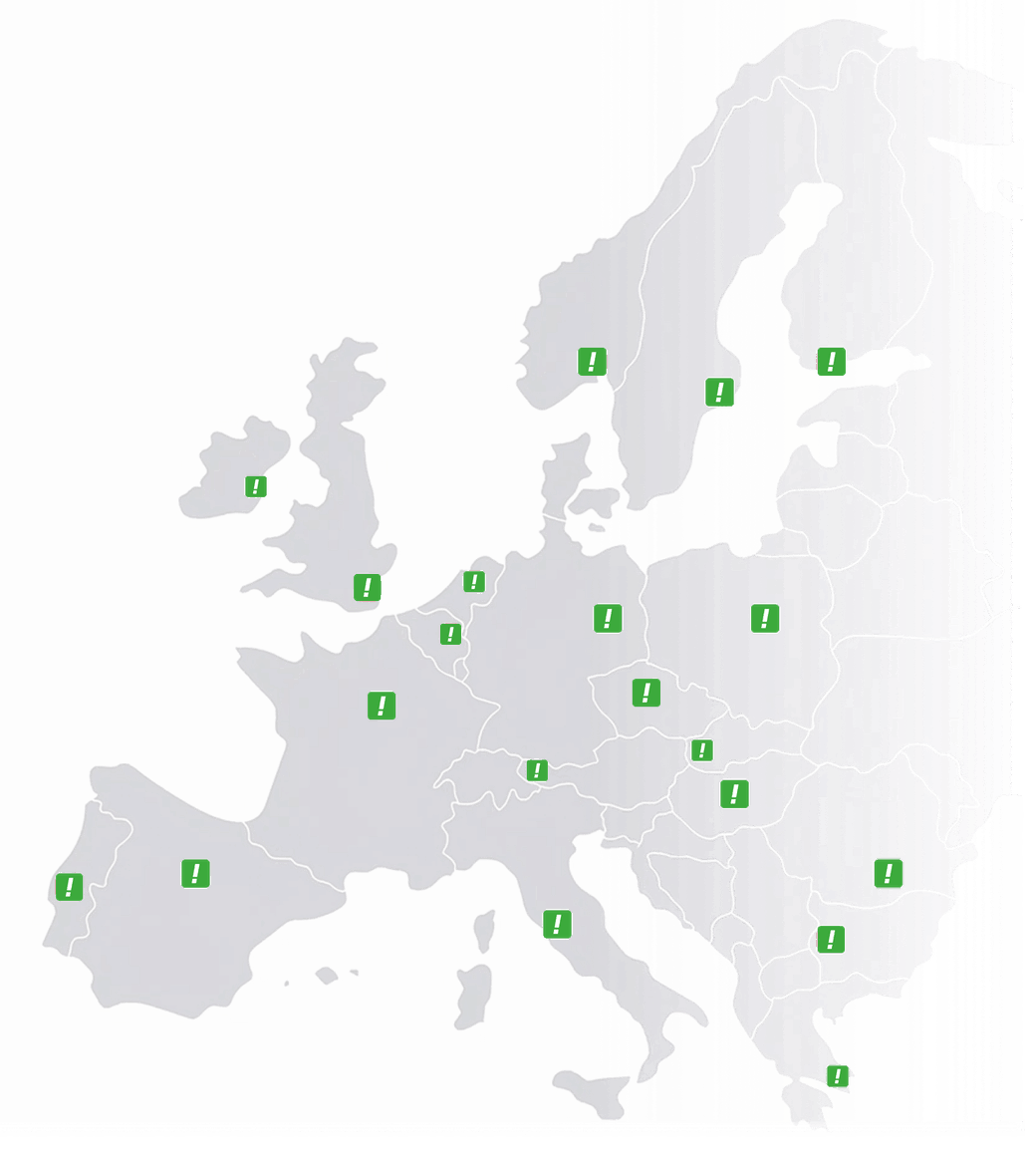
 Netherlands
 Belgium
 Denmark
 Germany
 France
 United States
 Austria
 UK
 Spain
 Italy
Call overflow for high call volume during campaigns and broadcasts
A TV appearance, a campaign or a post that spreads quickly can multiply your incoming calls within minutes. If we know about it in advance, your line is ready before the first call comes in: capacity reserved, the queue adjusted, a call overflow destination in place and the figures in front of you while it happens.
The question we ask in advance is how many callers you expect, because that is the number we reserve the lines for.

Simon tells us about the campaign, and we get the line ready
Next week Simon’s TV ad goes on the air. He tells us beforehand, and we reserve the lines, adjust the queue and set up an overflow before the first call comes in.
- Register a peak in advance
- Capacity reserved
- Queue and overflow adjusted
Why high call volumes need preparation
By the time the phone rings, the money for the campaign has already been spent. That is what makes an unprepared spike in call volume expensive, and why missed calls in a peak period cost more than on a normal day.
Callers hear a busy signal after your ad
You paid to get that caller to call you. They hear a busy signal, don’t try again and move on to the next search result, so the cost has been paid but the conversation never happens.
The team on the phones didn't know it was tonight
Marketing plans the broadcast and the people on the phones hear about it afterward. The queue is still set to three minutes, there is no overflow, and the message still talks about normal business hours.
You only see on Monday what you missed
During the peak nobody knows how it is going. That two hundred callers gave up only shows in a report on Monday morning, when the campaign is already over and the missed calls can’t be answered anymore.
A busy signal costs more than the extra phone lines
In a call peak, the telephony is rarely the largest cost. What matters is everything you have already spent to make the phone ring.
What you paid for each caller
Airtime, advertising budget and months of preparation. Every caller who gets through is a return on that money, and every caller who gives up is part of it lost.
What the extra capacity costs
The capacity to take those calls costs a fraction of what it cost to generate them. That is why arranging it in advance is almost always worth it.
Your number runs on our platform, not on a physical line in your office that can fill up. Capacity still has a limit, though: a number normally takes up to 50 calls at the same time, and for a campaign on radio or TV we can reserve more. That is why this starts with a question (how many callers do you expect?) rather than a button.
Handling high call volume in three steps, a few days ahead
- 01
You register the peak
you, in advanceYou tell us when, for how long and above all how many callers you expect, because that is the number we reserve the lines for. A broadcast at eight in the evening needs something different from a campaign that runs for three weeks.
- 02
We reserve the capacity
us, before the peakWe set the number of lines, adjust the queue to the expected call volume and add a temporary overflow destination for overflow calls, with a separate message saying it is busy if you want one.
- 03
You follow it as it happens
duringDuring the peak you see how many calls come in, how many calls are answered and how many phone calls go to the call overflow, so you can still adjust things that evening instead of reading about it on Monday.
Afterward everything goes back to your normal settings. Your regular routing is not touched.
How call overflow works outside a campaign
Call overflow is not only for TV evenings. Every number with a queue can send calls on when your team is busy, so inbound calls don't end in a busy signal or a long wait.
You set a maximum wait time for the queue. If nobody on your team answers within that time, the overflow call goes to the destination you choose: voicemail, a second team, a colleague’s mobile or another number, such as an answering service you already work with. Voicemail messages arrive by email as an audio file, so someone can call the caller back the same day.
The same rules help during business hours, after hours and in other busy periods. A Monday morning, the first day of a sale or an outage on your own service can all bring high call volumes without warning. With an overflow in place on your business phone number, callers always hear something useful instead of a phone that keeps ringing, which does more for customer satisfaction than any message about how important their call is.
A phone menu (IVR) can take part of the pressure off as well. Callers press 1 for an order status and 2 for support, so each call reaches the right group, and the team that is least busy picks up. The queue, the phone menu and call recording are included in Customer Service.
Overflow at a glance
- Calls at the same time
- up to 50 per number
- Campaign numbers
- more, reserved in advance
- Overflow destinations
- voicemail, team, mobile, number
- Your own changes
- active from the next call
- Changes we make
- within one business day
Call overflow settings for peak periods and high volume
How long someone waits
max. wait timeThe longest a caller waits before the call goes somewhere else. For a peak you set it shorter than usual, because keeping callers moving matters more than the order in which they called.
Where the overflow goes
overflowTo voicemail, an extra team or a second number. For a campaign it is temporary and applies only to this peak; for everyday overflow calls you keep a permanent destination.
What the caller hears
temporary messageA separate message for this evening, saying that it is busy, that the wait may be longer than usual, or that it will be quieter tomorrow.
Who watches the figures
live viewWho on your team has the overview in front of them during the peak, and who they call if things don’t go as expected.
Call overflow and high call volume: frequently asked questions

Want to talk it over first?
Our team helps you with numbers and voicebots in each of our countries. Call us or use the contact form.
Go to the contact form → From any country +31 85 400 5588A rule that sends a call on when it can’t be answered right away. If everyone on your team is busy or the caller has waited too long in the queue, the call goes to a second destination, such as voicemail, another team or a mobile, instead of ringing on without an answer.
Then your normal capacity applies: up to 50 calls at the same time on each number. If more calls come in at once, the queue takes the first wave and the rest goes to your overflow destination. That works, but it gives you less than a few days of preparation would have.
A few business days is enough. For a campaign that lasts weeks rather than one evening, we also look at how calls spread over the day, because a TV peak lasts twenty minutes while a radio campaign is spread out.
To voicemail, a second team, a colleague’s mobile or another phone number. You choose the destination for each number in the dashboard, and the change applies from the next call.
Up to 50 at the same time on each number as standard. Campaign numbers for radio or TV can take more: you tell us how many callers you expect and we reserve the capacity. That is why this is a conversation in advance rather than a setting in the dashboard.
No. The temporary setup runs alongside your regular call routing and is removed afterward. Your numbers, extensions and forwarding stay as they are.
Yes. You change destinations in the dashboard and the change applies right away, so if things don’t go as expected, you move calls to another team without calling us. A different setup of the call flow is work we do for you, within one business day.
Set a shorter maximum wait time and a clear overflow destination. In a peak, keeping callers moving matters more than the order in which they called, so a caller who waits too long goes to voicemail or a second team instead of hanging up. Good call handling in a high volume period means every caller gets an answer or can leave a message so your team calls them back.
Yes. With the queue exit key a caller presses a key to leave the queue and record a voicemail, and your team calls them back. The voicemail arrives by email as an audio file.
Yes. The dashboard shows incoming and missed calls for each number, and you also get the statistics by email every day and every week. That way you see where the pressure was and how many callers you still need to call back.
Yes. You set up a separate welcome message for the peak that tells callers the wait may be longer and asks them to stay on the line, so they know what to expect and fewer people hang up early.
No. A small customer service team with a queue, a phone menu and an overflow destination handles a large share of a peak, and voicemail catches the rest. Capacity to receive calls is not the same as capacity to answer them, so we help you decide what happens to the callers your team can’t take right away.
Tell us when your peak is
Give us the date and how many callers you expect, and we will reserve the capacity and set up the overflow.