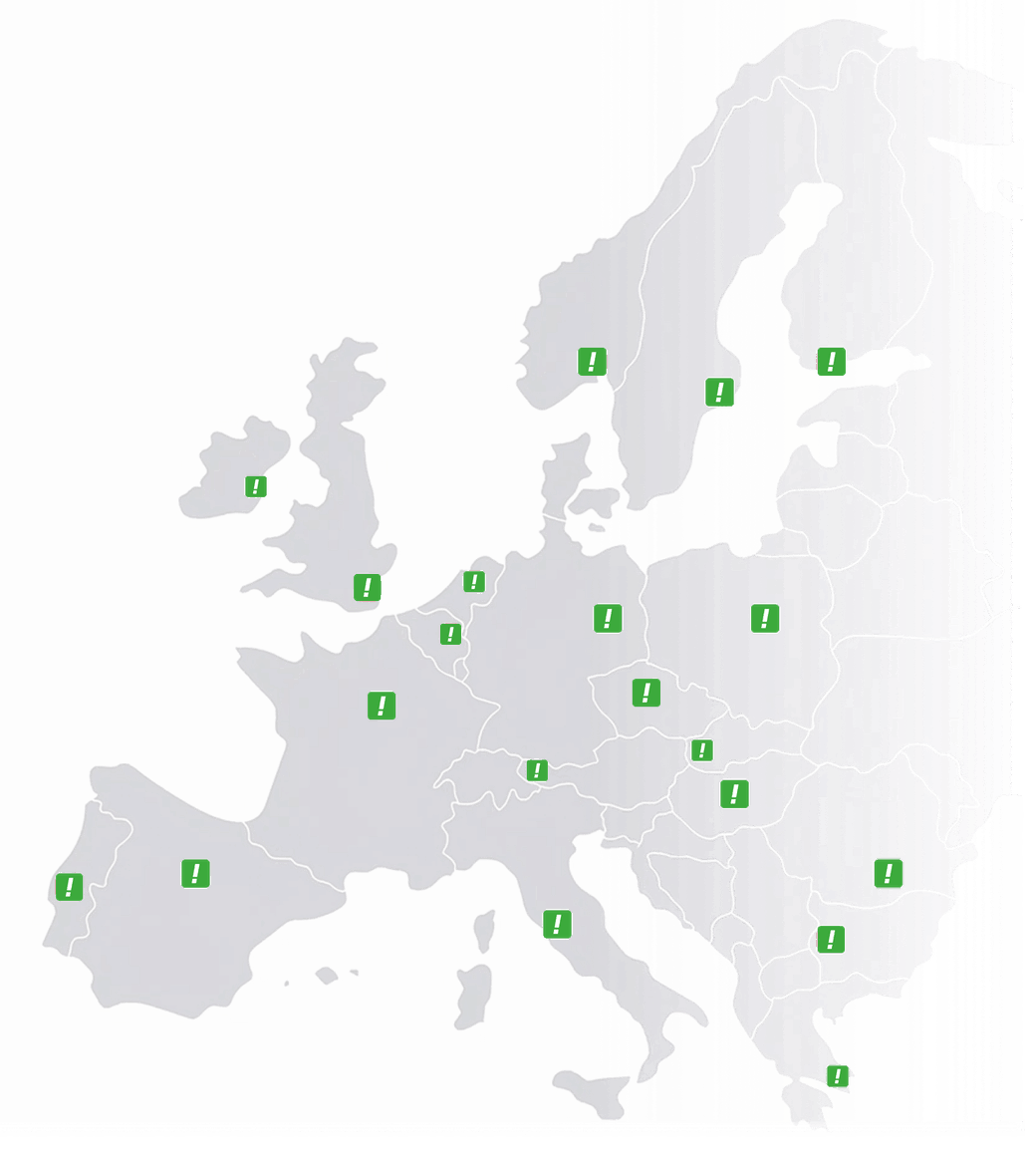
Netherlands
 Belgium
 Denmark
 Germany
 France
 United States
 Austria
 UK
 Spain
 Italy

Many businesses want customers to reach them on WhatsApp on the same number they use for calls. The question we hear most is whether a WhatsApp Business number can be a landline or virtual number instead of a mobile number with a SIM card. The short answer: often it can. You register the number yourself in Meta’s free WhatsApp Business app and receive the verification code by voice call. The telecom provider supplies the phone number, and WhatsApp decides the rest.
You can do this with a CallFactory number, and in this article we explain how. We also explain what you do and do not get, how WhatsApp itself looks at business use, and when an official WhatsApp partner is the better choice. If you want to see what a number costs first, take a look at our pricing.
Three ways to use WhatsApp for business
WhatsApp has two products for businesses, next to the ordinary app people use privately. The difference decides which rules apply to your business account.
Ordinary WhatsApp is made for contact between people. WhatsApp’s terms of service ask you to register with your own mobile phone number and rule out non-personal use unless WhatsApp authorizes it. If you are a business, you belong in the business products, not on a personal WhatsApp account.
The WhatsApp Business app is free and, according to WhatsApp, built for small businesses. You download it from the Google Play Store or the App Store. You may register a mobile phone number or a landline number that you own, and receive the verification code by phone call. You set up a business profile with your business name, address, opening hours and a short description. The terms for the Business app allow business use only.
The WhatsApp Business Platform (often called the WhatsApp API) is meant for medium and large businesses that handle many customer messages, work with several agents or want messaging automation connected to their own systems. You arrange it through Meta’s Cloud API or an official WhatsApp partner, and since 1 July 2025 you pay per message sent.
Can a business landline number be your WhatsApp Business number?
Yes, if WhatsApp accepts it. The WhatsApp Business app lets you register a landline number, because businesses often want customers to see one business phone number for calls and messages. The difference with a mobile number is the verification process: a landline number cannot receive a text message, so you choose the voice call option.
That is also how it works with our numbers. Our numbers do not receive SMS, so you always choose “Call me” when WhatsApp offers to send the registration code. WhatsApp then calls the number and an automated voice reads out a six-digit code.
WhatsApp decides for itself which numbers it accepts. Its Help Center lists VoIP numbers, toll-free numbers, premium-rate numbers and personal numbers as types that cannot be registered, and extension numbers behind a phone system do not work either. Whether a local or national number is accepted depends on how WhatsApp assesses that specific number. The simplest approach is to test it.
How to activate WhatsApp Business on your business number, step by step
- Get the number. Choose a local or national number in the country where your customers are. Toll-free numbers are not accepted by WhatsApp, and they can usually only be called from inside their own country.
- Prepare the verification call. Point the number straight at a phone you answer yourself, so a welcome message or phone menu does not pick up WhatsApp’s call. You change this in the dashboard.
- Install the WhatsApp Business app on the phone that will manage the account, from the Google Play Store or the App Store, and enter the business number with its country code.
- Choose verification by voice call. If the app first offers an SMS, choose “Call me” instead (the option can appear after a short wait). Answer the call and enter the code.
- Set up your business profile. Add your business name, category, address and opening hours, so customers see a professional presence.
- Switch your call routing back on. Restore your welcome message, menu and colleagues, so phone calls work as before.
What a telecom provider supplies, and what it does not
A telecom provider that is not an official WhatsApp partner supplies a phone number that can receive a verification call from WhatsApp. That is where it ends. No WhatsApp traffic runs over the provider’s platform, there is no contract with Meta, and nobody can guarantee that your WhatsApp Business account stays active. That applies to us as well, because we are not connected to the WhatsApp Business Platform.
What we do supply is the part that matters for calls: a virtual number in the country you choose, which rings on the mobiles, landlines or desk phones your team already uses, with call forwarding, opening hours and voicemail. Calls to international numbers never go over the internet; they ring on a landline or mobile.
How WhatsApp looks at business use
In the terms for the Business app, Meta keeps the right to limit, suspend or terminate an account. Once an account is terminated, you may not create a new business account without its written permission. In its messaging guidelines, WhatsApp names unofficial clients, bulk messaging and auto-messaging among the reasons to suspend an account.
A banned account shows a message that the phone number cannot use WhatsApp. According to WhatsApp, only WhatsApp can ban or unban an account, and if the app shows no option to request a review, the ban is final. The number on your invoices and website then loses WhatsApp, while phone calls keep working.
The direction Meta is taking is clear. The Business Platform charges per message, the Business app is getting paid add-ons, and businesses that use WhatsApp seriously for customer engagement increasingly end up on paid, official routes.
Who answers the messages?
With us, one business number can ring for several colleagues at once, so whoever is free picks up. WhatsApp works differently: a Business app account runs on one main phone with up to four linked devices, such as WhatsApp Web on a laptop. Linked devices are logged out if the main phone is not used for more than fourteen days.
So agree in advance who manages the main phone, who answers customer messages and what happens when that person is away. Messages do not pass through our platform, so our routing, queue and opening hours only apply to phone calls. If your team wants WhatsApp as a full customer channel with a shared inbox, the Business Platform through an official partner is the right route.
Usernames: keep calls and WhatsApp separate
WhatsApp is introducing usernames, so customers can find you by a name instead of a number. A phone number is still needed to register, and on a business profile both the username and the number are visible.
We recommend keeping the path for phone calls and the path for WhatsApp separate. A phone number is meant first of all for voice calls. Publish your business number for calls and your WhatsApp username for messages, so a ban or change at WhatsApp never affects how customers reach you by phone. Read more in our article on WhatsApp usernames.
How to choose the right route
If you use WhatsApp now and then for a customer question, and it is not a problem if the channel drops out occasionally, register your CallFactory number in the free WhatsApp Business app. Test it during the free 7-day trial, agree who answers the messages and keep in mind that WhatsApp sets the rules.
If WhatsApp is a channel your revenue depends on, for example for appointments, orders or customer service, choose the WhatsApp Business Platform through an official partner. Ask the provider for proof of its partnership with Meta and check WhatsApp’s Partner Showcase, keeping in mind that Meta says the list is not complete. Your phone number can stay with us next to it, so your reachability by phone never depends on another platform.