 Netherlands
 Belgium
 Denmark
 Germany
 France
 United States
 Austria
 UK
UK Spain
Spain Italy
Italy
Spanish business buyers are noticeably more reluctant to dial an unfamiliar foreign number. When a procurement manager in Madrid or a purchasing team in Barcelona finds a long international string on a supplier’s website, advert, or quote, the natural reaction is to hesitate, because an unknown +44, +49, or +31 prefix signals a company that sits outside the country, carries a higher call cost, and may not answer in their language. That single detail can stop a promising inquiry before the phone ever rings, since the buyer simply looks for a contact that feels closer to home.
A local Spanish number removes that barrier. Once your line is a +34 number in the format Spanish customers recognize, they call you in their own country at local rates without an international call, so a prospect who would have skipped a foreign number is far more willing to pick up the phone. You can secure exactly this kind of line through the Spanish phone number page, and the rest of this guide explains how the number works, what Spanish regulation actually requires of a foreign company, and how CallFactory sets everything up.
Why a Spanish number strengthens your sales in Spain
Trust in B2B buying is built on small signals, and the number a supplier publishes is one of the first a buyer notices. A +34 line tells a Spanish company that you are reachable on local terms, so the inquiries you generate arrive without the friction of an international dialing format and at a cost the caller treats as ordinary. Because the number looks domestic, prospects assume local support hours, local language, and a contact they can reach at standard rates, so the conversation starts from a position of familiarity rather than suspicion.
The effect opens the Spanish market and keeps you close to your customers. A local line on your website, ads, directories, quotes, and email signature turns passive interest into inbound calls, and partners who pass your details onward do so with a contact that fits the expectations of their own market. A nationwide +34 number delivers this local face without a physical office in Spain, while a provincial number is available where your business is established in that region, so you keep your existing operation and still present the contact Spanish buyers respond to.
What a Spanish number is and how it works
A Spanish number is a real telephone number in the country’s +34 numbering plan, assigned to you and routed by a licensed operator. Geographic numbers carry a provincial area code, so a Madrid 91 number signals the capital and a Barcelona 93 number signals Catalonia’s commercial hub, while a nationwide number gives you coverage that is not tied to one city. Whichever you choose, the number behaves like any other Spanish line from the caller’s side.
Behind that number, the call is delivered to wherever your team actually works. There is no hardware to install in Spain and no local SIM to manage, because the routing happens on the operator’s platform and lands on your existing phones, softphones, or call center. When a Spanish customer dials your +34 number, the call is carried to your team in another country while the caller experiences an ordinary domestic Spanish contact. The geography your customers see and the geography your staff sit in are decoupled, which is precisely what lets a company outside Spain operate with a local presence.
The geographic-zone rule in Spain (CNMC)
Spanish numbering is governed by the CNMC, the Comisión Nacional de los Mercados y la Competencia, and it draws a clear line between geographic and nationwide numbers. For a geographic 9xx number the rule is specific: the end user’s registered place of business must be located within the province that the area code covers. A Madrid 91 number therefore requires a business presence in the Madrid zone, and a Barcelona 93 number requires one in Barcelona. The address is documented with the operator and can be requested by the CNMC, so the link to the zone has to be genuine.
This is what decides which number you choose. If your company already has an establishment in a Spanish province, you can take that province’s geographic code and present a city-level identity. If you do not have a presence in Spain, a nationwide Spanish number is the route to a +34 line: it carries the local identity Spanish buyers recognize, is not tied to a single geographic zone, and can be registered on your company address in any country. CallFactory handles the registration either way as the licensed operator: you provide your company details, CallFactory files them with the CNMC in the required format and stores the data, so the regulatory side is managed for you once the right number type is chosen.
How to order a Spanish number through CallFactory
Ordering is a short process. You choose the number type that fits your situation, a provincial Madrid 91 or Barcelona 93 number if your business is established in that zone or a nationwide number if it is not, and you supply your company registration documents. CallFactory prepares the CNMC filing on your behalf and activates the line, which is usually live within 24 working hours once your paperwork is complete.
From there you decide how calls should behave. Use call forwarding [https://www.callfactory.co/features/call-forwarding/] to deliver every call to your existing team wherever they sit, whether that is one office, several locations, or staff working remotely. Add the text-to-speech assistant [https://www.callfactory.co/features/text-to-speech-assistant/] to greet Spanish callers in their own language before the call connects, so the line sounds local from the first second. If you want a record of what was discussed for training or compliance, call recording [https://www.callfactory.co/features/call-recording/] captures conversations on the same number. Each feature is configured once and runs automatically, so the setup matches the way your team already works.
Benefits for your business
The clearest benefit is reach: a Spanish number lets you open the Spanish market as a local supplier while running everything from your home base. A nationwide +34 line needs no physical office, so you can test or grow the market without that cost and delay, while a provincial number adds a city-level identity once you are established in the region. Inquiries come in more freely because the number reads as domestic, and the cost barrier disappears for your customers, who call a local line at local rates.
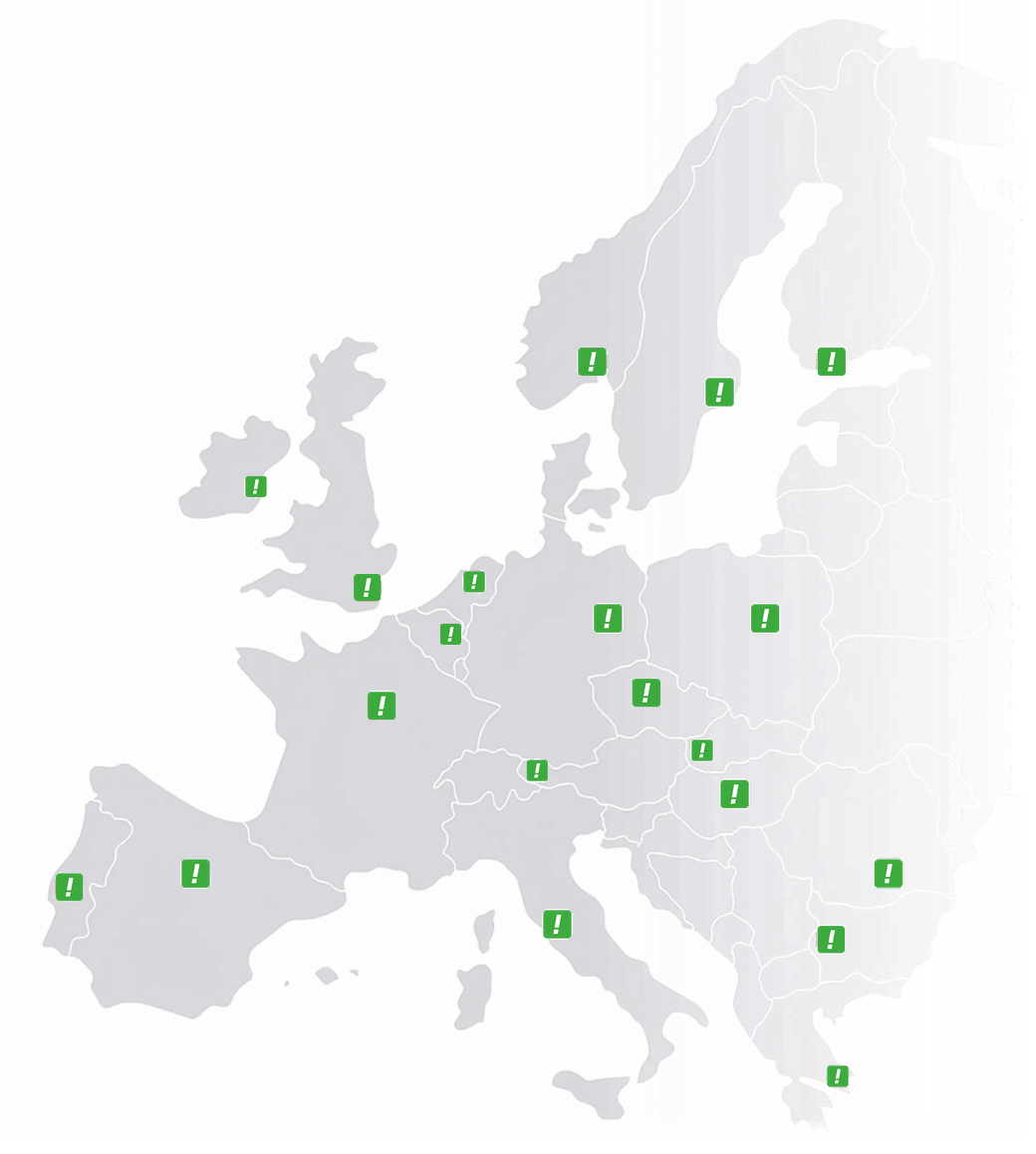
Call quality is part of why this holds up in practice. CallFactory carries calls over a premium fixed-network routing path rather than the cheapest available internet route, so audio stays clear and connections stay stable on the business calls that matter. That reliability comes from running the service directly: CallFactory is a licensed telecom provider in 15 countries and runs its own intelligent IVR platform, which keeps the call routing and the team that changes it in one accountable place. Operating telephone services across Europe since 2001, the company has handled the Spanish numbering rules many times over, so the part that looks complicated to an exporter is routine on the operator’s side.
How to get started
Getting started takes one decision and one set of documents. Pick the number that matches your situation, a provincial Madrid or Barcelona number if you are established in that zone or a nationwide line if you are not, and send your company registration details so CallFactory can prepare the CNMC filing. Once the paperwork is complete, the number is typically active within a working day, ready to publish on your Spanish website, email signatures, and proposals.
You can review the available options and begin the process on the Spanish phone number page. From the moment the line goes live, your Spanish customers see a local contact they are willing to call, your inbound inquiries arrive on local terms, and your business operates in Spain while staying exactly where it is. If Spain is one of several markets you plan to open, our international phone number guide compares local, national and toll-free options country by country.