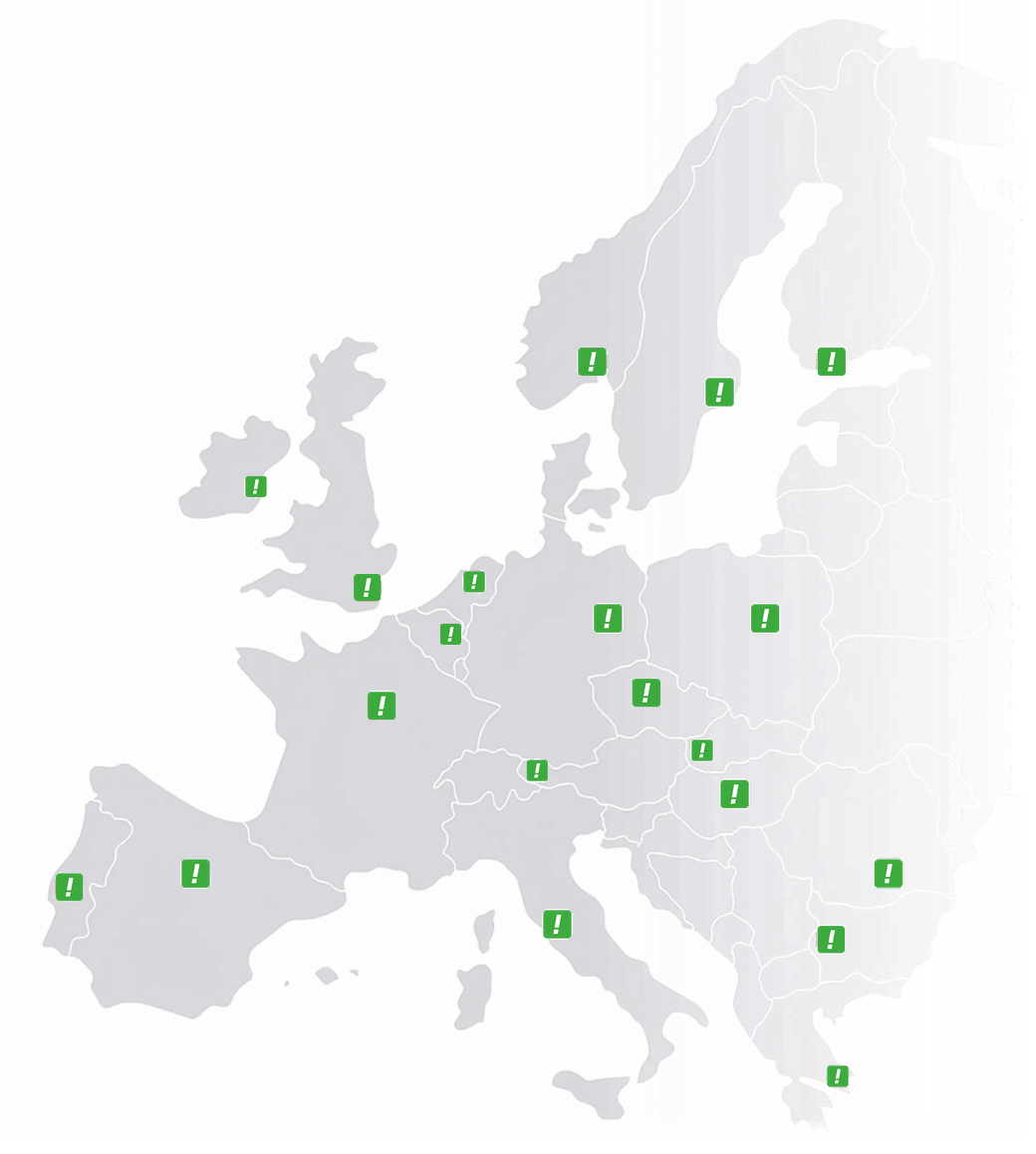
 Netherlands
 Belgium
 Denmark
 Germany
 France
 United States
 Austria
 UK
UK Spain
Spain Italy
Italy
IVR stands for interactive voice response: the automated phone menu that answers an incoming call, tells the caller which options there are and routes the call to the right person, team or queue based on the key they press or the word they say. It is the “press 1 for sales, press 2 for support” you hear when you call most companies, and it is the reason a well-run business line never needs someone to sit at a switchboard.
This guide explains what an IVR system is, how it handles a call step by step and what a business needs to set one up. On our platform the IVR is called the selection menu, and it works in front of any local, national or toll-free number that your customers call, so every inbound enquiry lands with the team that can answer it.
What does IVR mean?
The three letters describe exactly what the system does. Interactive means the caller takes part by choosing an option, voice refers to the recorded or synthesized prompts they hear, and response is the action the system takes once the choice is made. An IVR therefore combines a spoken greeting, a list of options and a set of routing rules that decide where each option leads.
Early IVR systems were boxes installed in a company’s own phone room. Today an IVR system usually runs in the cloud on the operator’s network, which means the menu works before the call reaches your office, your laptop or your mobile, and you change it in a dashboard instead of calling an installer.
How an IVR system works, step by step
A call to an IVR follows the same path every time, which is what makes it predictable for both the caller and your team:
- The call arrives on your business number and the IVR answers it straight away.
- The greeting plays, usually a short welcome message with your company name, recorded by a voice actor or generated with text-to-speech.
- The menu presents its options, for example sales, support and billing.
- The caller chooses by pressing a key or saying the option out loud.
- The IVR routes the call to a person, a group of colleagues, a call queue or a voicemail box.
Rules sit around that core flow. Outside business hours the menu can play a different message and send callers to voicemail, while calendar-based routing changes the flow automatically on public holidays, so nobody has to remember to switch it.
What businesses use an IVR for
The most common use is splitting one public number over several departments, so a customer with an invoice question does not end up with the sales team and the sales team is not interrupted by support calls. Companies that sell in more than one country often add a language choice at the start, which lets a single number serve customers in their own language.
An IVR also protects busy teams during peak hours. When everyone is on a call, the menu places new callers in a queue with music or a message instead of letting the phone ring out, and you can record calls in that queue for training with call recording. Smaller teams use a short menu mainly to look established and to make sure urgent calls reach the person on duty.
IVR or voicebot?
An IVR works best when you know the routes a call can take, because each option leads to a fixed destination. A voicebot understands natural speech and can answer a question itself, which suits open-ended calls about opening hours, delivery status or appointments. The two are not competitors: a common setup keeps the IVR for routing and lets the voicebot handle the questions a menu cannot answer, so your staff spend their time on the calls that need a person. For the technical side of building a voicebot, read how stitched and real-time voicebots differ. ## Why the platform behind your IVR matters We have been a telecoms operator since 2001, licensed in 14 European countries, and we run our own intelligent IVR platform. For an IVR that means a custom flow, a dedicated IVR server or private API access through our API integrations is built by the people who operate the platform, whereas a provider without its own platform can only open a ticket with its upstream provider and wait. For a deeper comparison, see why a dedicated IVR server beats building on a generic cloud API.
Call quality matters just as much as features, since a menu nobody can hear clearly costs you the call. We route calls over premium fixed telephone networks rather than the cheapest internet path, so customers who reach your IVR hear clear prompts and are connected without delay, even when your team sits in a different country from the caller.
How to set up an IVR for your business
Start by listing the reasons customers call you and group them into no more than four options, because callers forget longer lists before they reach the end. Write a greeting of one or two sentences, decide which team or colleague answers each option, and set business hours plus an out-of-hours message. After that you choose a number your customers can call locally, whether that is a local, national or toll-free number.
The selection menu and call queue come with the Customer Service plan and with the VoIP Phone System, while the Business Number and Phone System plans route calls without a menu. A standard menu is live the same working day, and you change options, prompts and routing yourself in the dashboard. Compare the plans on our pricing page or see the complete phone system to get started.