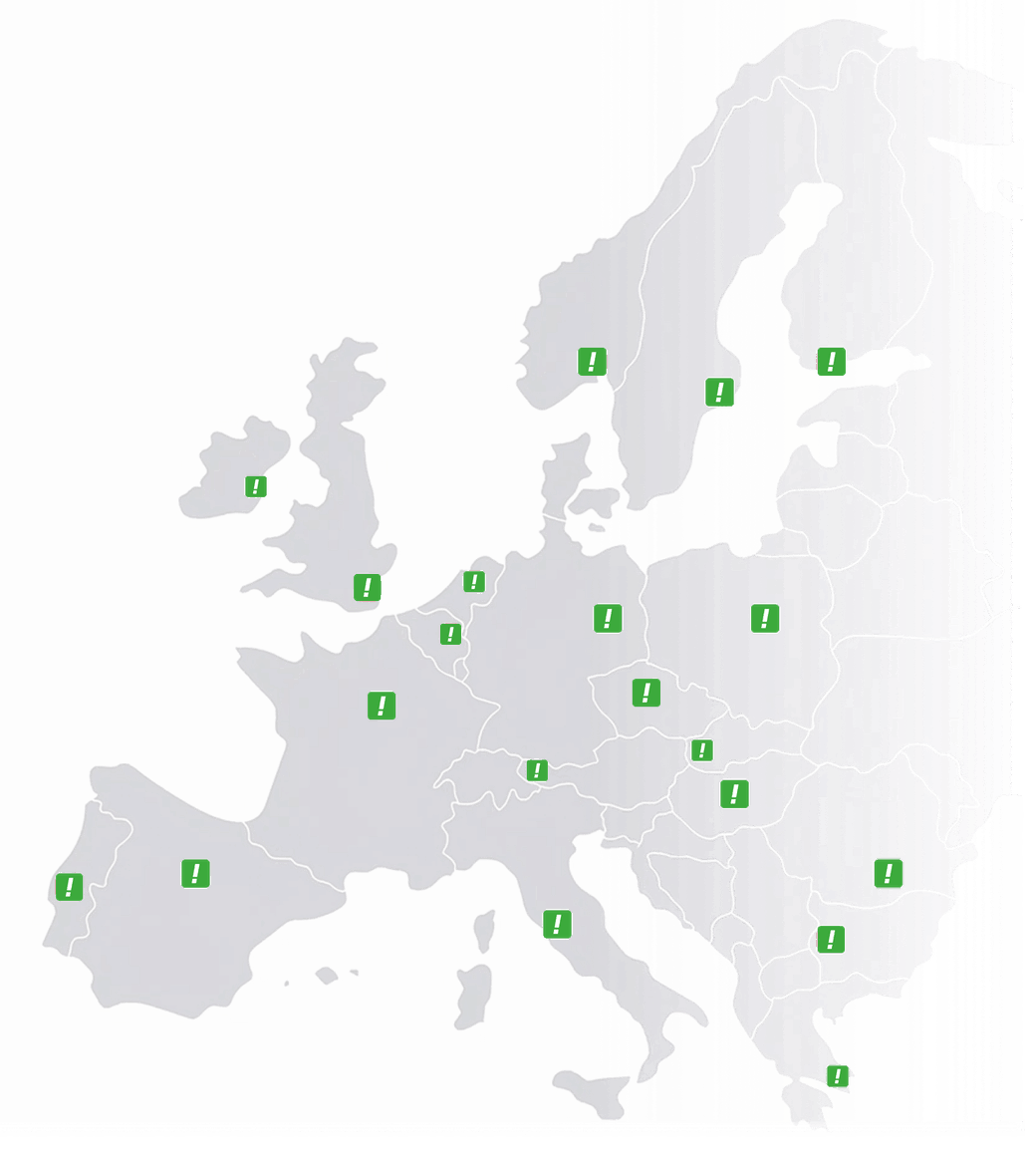
Netherlands
 Belgium
 Denmark
 Germany
 France
 United States
 Austria
 UK
 Spain
 Italy

Number porting is moving a phone number from one service provider to another while the number stays the same. Your customers keep calling the number on your website, invoices and business cards, and only the provider behind it changes. For a business, that means you can switch to a new provider without losing the number your customers know.
In this article you read how phone number porting works, what you need for a port request, how long the porting process takes, which numbers can be ported and how to avoid the mistakes that delay a port. If you already know you want to move your number to us, go straight to port your existing number.
What is number porting?
A phone number is not tied to one company. In most countries the law gives you the right to take your number with you when you change provider. In the United States, the Telecommunications Act of 1996 and the FCC rules on number portability require carriers to let customers keep their number when they switch. In the European Union, the European Electronic Communications Code gives the same right to every subscriber, business or consumer.
Behind the scenes, number porting changes the routing record of the number. Before the port, calls to your number are delivered to your old provider; after the port, they are delivered to the new provider. The number itself, area code included, stays exactly the same.
How to port a phone number, step by step
The porting process follows the same steps in almost every country. The new provider does the work, and you supply the information.
- Choose your new provider and plan. Our checklist for a virtual phone number service helps you compare. You request the port at the provider you are moving to, not at your current one. With us you choose a plan for the number first.
- Collect your account information. Find a recent invoice from your current provider. You need the phone number, the provider’s name, the account number and the name and billing address the number is registered under.
- Sign the letter of authorization. A letter of authorization (LOA) allows the new provider to request the port on your behalf. It must be signed by the account owner, usually someone who can sign for the business that holds the number. We send you the right form for the country of your number.
- We send the port request. We submit the request to your current carrier and agree on the date of the switch. Your number remains active with them in the meantime.
- The number moves. On the agreed date, calls start arriving through us. The number rings where you set it up in the dashboard: on your mobile, your landline, a desk phone or a softphone.
- Check the old contract. The port ends the service for that number with your old provider. Check whether other services or costs remain on that account.
How long does number porting take?
With CallFactory, porting takes at most five business days from the moment we send the port request to your current provider. Weekends and public holidays are not counted. How long it takes within those days depends on the country and on how quickly the old provider confirms the request.
The rules set limits for the switch itself. In the EU, once the date is agreed, the number must move within one business day and you may not be without service for more than one business day. In the US, the FCC requires “simple ports” (a single number without complex services) to be completed within one business day after the request is validated. Larger ports, toll-free numbers and numbers with several services on one account can take longer. Our five business days cover the whole route, from request to calls on our platform.
Does my number keep working during the port?
Yes. Your number stays active with your current provider until the port completes, so callers reach you as usual and you do not need a temporary number. On the day of the switch, calls start arriving through us. In most cases callers notice nothing.
This is also why you should not cancel your old phone service before the port. If you end the contract first, your current provider can release the number back to its pool, and it may be gone before the new provider can request it. Let the port end the service for that number.
Which numbers can you port?
Most business numbers can be ported. With us you can port:
- Local numbers, with the area code of a city, such as 020 Amsterdam or 030 Berlin.
- National numbers, such as 085 in the Netherlands or 032 in Germany.
- Toll-free numbers, such as 0800 or 1-800 numbers. A toll-free number stays free for the caller after the move.
- Shared-cost numbers, in the countries that have them.
Numbers from other countries can be ported in too, on the same terms, so you can bring numbers from several countries together on one platform and manage them in one dashboard. Tell us the country of each number, so we send the right form. Read what to expect from a premium European local number provider.
Mobile numbers cannot be ported in to us. If your business uses a mobile number as its main number, you keep it with your mobile network. You can still let a new business number ring on that mobile, so you answer business calls on the phone you already carry.
Port requests: common reasons for delay
Most delays in phone number porting come from details that do not match. Check these before you send the request:
- The account holder. The name on the port request must be the name the number is registered under, often the legal name of the company, not a brand name.
- The account number and billing address. They must match the current provider’s records exactly. Copy them from a recent invoice.
- The signature. The letter of authorization must be signed by someone authorized for the account.
- A transfer PIN. Some providers, especially US wireless carriers such as T-Mobile and Verizon, ask for a number transfer PIN before they release a number. You request it from your current provider.
- Other services on the line. A number with internet or other services bundled on it can need extra steps at the old provider.
If the old provider rejects a request, it gives a reason, and we tell you what to correct.
What happens to your contract and early termination fees?
Porting your number and ending your contract are two different things. The port moves the number; it does not settle your contract with the old provider. If you are still in a minimum term, your provider may charge early termination fees. We cannot see your contract with your current provider, so check the terms with them.
Porting your number to CallFactory
Number porting to CallFactory is free and takes at most five business days. Your number keeps working with your current provider until the switch. After the move, the number gets the features of your plan: call forwarding to mobiles and landlines, a welcome message, voicemail and business hours. With Customer Service you add a phone menu (IVR), a call queue and call recording.
You pay only for your plan: Business Number at €149 a year, Phone System at €25 a month or Customer Service at €49 a month, excluding VAT. A number in another country is €49 a month (€490 a year) with every Customer Service feature. On local and national numbers in the 14 European countries where we are licensed, calls are included with normal use. See pricing for the details.
Not ready to port yet? You can also start with a new number from us and forward your old number to it, then port the old number when your contract allows it. Ported numbers and new numbers appear side by side in the same dashboard.