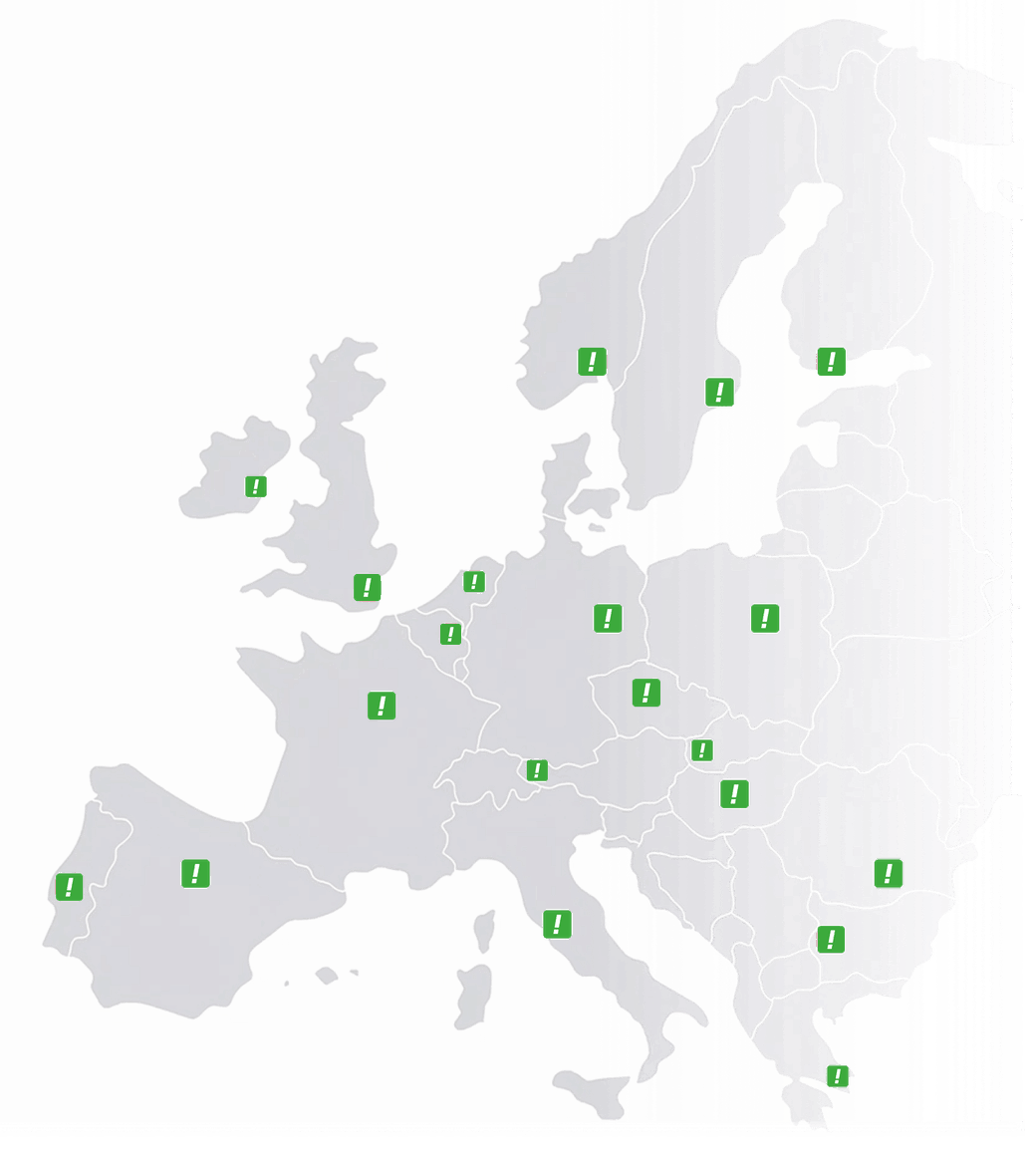
Netherlands
 Belgium
 Denmark
 Germany
 France
 United States
 Austria
 UK
 Spain
 Italy

Search for the cost of a voicebot and you often find a range instead of a number. At CallFactory the price is on the pricing page: €49 a month plus €0.35 per minute the voicebot talks, billed per second, on top of a plan from Phone System. The voicebot cost for your business per month therefore depends mainly on how many calls it answers and how long it talks in each one.
This article explains what that price consists of, how to calculate it for your own call volume, which hidden costs to look for in AI phone agent pricing in general, and when a simpler solution is cheaper. The voicebot that handles incoming calls runs on our own platform, so it is a destination in the same call routing as your colleagues, your queue and your phone menu.
What the voicebot cost consists of
The price has three parts.
- The plan the voicebot runs on. The voicebot is added to a plan from Phone System, which costs €25 a month or €250 a year and includes your business number, call routing and the basic features.
- The voicebot itself, at a fixed €49 a month.
- Actual usage: €0.35 for each minute the voicebot talks, billed per second, not rounded up to the nearest minute.
Only the last part moves with your call volume. In a quiet month you pay little usage, and at a peak the voicebot scales with you without capacity you have to buy in advance. There is no setup fee, no charge per user and no bundle of included minutes that runs out. All prices exclude VAT.
A worked example for a business with 400 calls a month
Take an installation company that receives 400 inbound calls a month. The voicebot handles 250 of them itself: it records fault reports, schedules appointments and answers questions about opening hours. If the part of each call in which the voicebot talks lasts one and a half minutes on average, usage comes to 375 minutes, which costs €131.25 at €0.35 per minute.
Add the fixed amounts: €49 for the voicebot and €25 for the Phone System plan. The total monthly bill is €205.25, excluding VAT. The other 150 calls go through the voicebot to a colleague, so your team only takes the calls where a person adds something.
| Part | Calculation | Per month |
|---|---|---|
| Phone System plan | fixed | €25.00 |
| Voicebot | fixed | €49.00 |
| Usage | 375 minutes × €0.35 | €131.25 |
| Total | excluding VAT | €205.25 |
Pay as you go or a fixed price: common pricing models
AI phone agent pricing comes in a few common pricing models, and the real cost of a voice agent depends on which one you choose.
- Pay as you go. You pay per minute rates for the calls the voice agent handles, with or without a small monthly fee. The total cost follows your call volume, so a quiet month is cheap.
- Bundles with included minutes. You pay a fixed amount for a set number of minutes per billing cycle. Minutes consumed above the bundle are billed at a higher rate.
- Per seat or per agent. You pay for each AI agent or each user, which can be expensive when several AI agents run in parallel. The same question comes up for phone systems: see per-user or per-minute pricing.
- Self hosted or your own stack. Some companies build voice AI on their own infrastructure from speech to text, a language model and text-to-speech parts. That gives full access and control, but your own team then carries the telephony, the quality assurance and the fixes.
Our voicebot is pay as you go on top of a fixed monthly fee: €49 a month plus €0.35 per minute it talks. The price covers concurrent calls up to 50 per number, every language and the telephony, so there are no hidden fees for add-ons such as extra lines.
What building the voicebot costs
You do not have to draw call flows or configure anything yourself. You explain to us which questions come in, what the right answer is and when a colleague should take over, and we build the voicebot. You get a number to call it yourself, we adjust what is not right, and it is usually live on your line within two business days. There is no setup fee.
If the voicebot needs to look things up during the call, such as your calendar, your order system or your customer records, it needs a CRM integration or another connection. A CRM integration lets the AI voice agent read and write customer data during complex calls, for example to check an order status or log a request for your support teams. Such an integration is custom work on quote, because the time it takes depends on how your own business systems can be reached. You hear the price for your situation in the first conversation, before anything is built. Start small if you can: three topics handled well bring more than ten that are half finished.
Hidden costs to check in AI phone agent pricing
Voice agent pricing comes in several cost models, and the headline per minute rate is not always the effective cost. When you compare offers, check these points:
- What counts as a billed minute. Is it the whole call, or only the time the agent speaks? Is it billed per second or rounded up to the nearest minute?
- Platform fees and add-ons. Some pricing models add separate fees for the phone number, speech to text, text-to-speech voices or call recordings. Ask for the all-in price for one month of real calls.
- Included minutes and overage charges. A plan with limited minutes can look cheap until a busy month pushes you into overage charges.
- Concurrent calls. Check whether the price covers several calls at once or whether extra lines cost more.
- Volume commitments. Some mid tier plans require a minimum number of minutes per billing cycle.
- The telephony behind the agent. An AI phone agent needs a phone number and call routing. If those come from a separate supplier, add their cost and ask who fixes a fault.
At CallFactory the voicebot, the number and the call routing come from one platform and one invoice, so the three parts above are the whole price.
How to calculate the voicebot cost for your own business
Start with your call volume. Count how many calls you receive a month and estimate which share are recurring questions, because that is the share the voicebot takes over. Multiply that number of calls by the average time the voicebot talks and by €0.35, then add €49 for the voicebot and the price of your plan.
Then compare that with what the same calls cost you now. Count the time your team spends on them at its hourly cost, add the cost of an outsourced answering service if you use one, and do not forget the missed calls. With an order value of a few hundred euros, one extra customer a month is often enough to cover the whole amount. After go-live, the call statistics show your incoming and missed calls, so you can see how the picture changes. How a voicebot compares with a human answering service is covered in answering service vs voicebot.
When a phone menu is the cheaper choice
A voicebot is not always the right answer. If you receive a handful of calls a week that almost all go to the same department, a phone menu (IVR) does the same job without a per minute cost. The phone menu is included in the Customer Service plan, at €49 a month or €490 a year for up to eight people.
The tipping point lies in how varied the questions are, not only in the volume. When callers have questions they cannot find in a menu, they give up at option four, while a voicebot lets them say what they need and answers directly. Many businesses combine both: the menu catches the clear choices and the voicebot handles the rest. Read more in voicebot vs IVR.
Why the telephony behind the voicebot matters for the price
A voicebot is only as reliable as the line it runs on. We route calls over premium fixed networks and deliver them over the phone network, so calls connect cleanly and the voicebot understands what the caller says. A lower per minute price is worth little if calls drop or callers try someone else afterward.
CallFactory has provided business telephony since 2001, is a licensed operator in 14 European countries and runs its own platform. When something needs to change, you talk to the team that runs both the platform and the voicebot. If you want to know what a voicebot costs in your situation, ask us for a calculation based on your own call volume, so you see an amount instead of a range.