 Netherlands
 Belgium
 Denmark
 Germany
 France
 United States
 Austria
 UK
UK Spain
Spain Italy
Italy
A French customer who finds an unfamiliar foreign number on your website or in a directory often hesitates to dial it. Procurement teams, office managers, and decision-makers in France weigh who they call, and a visible foreign prefix tells them, before they even pick up the phone, that the supplier sits outside their country. That perception works against you at the very first contact, because a number that reads as foreign quietly raises questions about call costs, response times, language, and whether there is anyone reachable during local hours. For a company that wants to win business in France from abroad, that friction shows up directly in fewer inbound inquiries and slower deal cycles.
A local French number removes that barrier at the point where it matters most, which is the moment a prospect decides whether to dial. A +33 number in the familiar French format means French customers call you in their own country, at local rates, without placing an international call, so they are far more willing to reach a number they recognize as French than a foreign one. The calls are then answered by your existing team wherever they sit, while the number itself must be registered to a French establishment with a French address, a Kbis extract, and a SIRET number, which the rest of this guide explains. The starting point is the French phone number page, which lets you choose a number and begin the registration that puts a local presence in front of the French market.
Why a French number opens the French market
Trust in B2B sales is built in small signals, and the telephone number is one of the first a prospect reads. A +33 number tells the buyer that reaching you costs nothing unusual and that you are present in the French market rather than operating from somewhere else. That is what gets a French customer to dial in the first place, because the same number printed on your website, your ads, business directories, your quotes, and your email signature gives them a contact that looks native to them, so they reach out instead of looking elsewhere.
The effect compounds as you build presence in France. A French line on every touchpoint means each prospect, partner, and supplier who finds you sees a familiar local contact, so inquiries come in and conversations start instead of stalling at the dialing stage. Being close to your customers this way costs nothing in language or call charges for them, which is exactly the reassurance that turns a viewer of your page into a caller. A French number does not replace good selling, yet it removes a recurring obstacle that sits in front of every customer who wants to reach you, which means your team spends more time in live conversations.
What a French number is and how it works
A French number is a regular telephone number in the +33 numbering plan, assigned to you as the subscriber and pointed at whatever destination you choose. France uses +33 as its country code, and geographic numbers carry a zone digit after it, so a Paris number falls in zone 1. The number itself lives on the carrier network rather than on any single device, which is why you can keep it for years and redirect it as your setup changes.
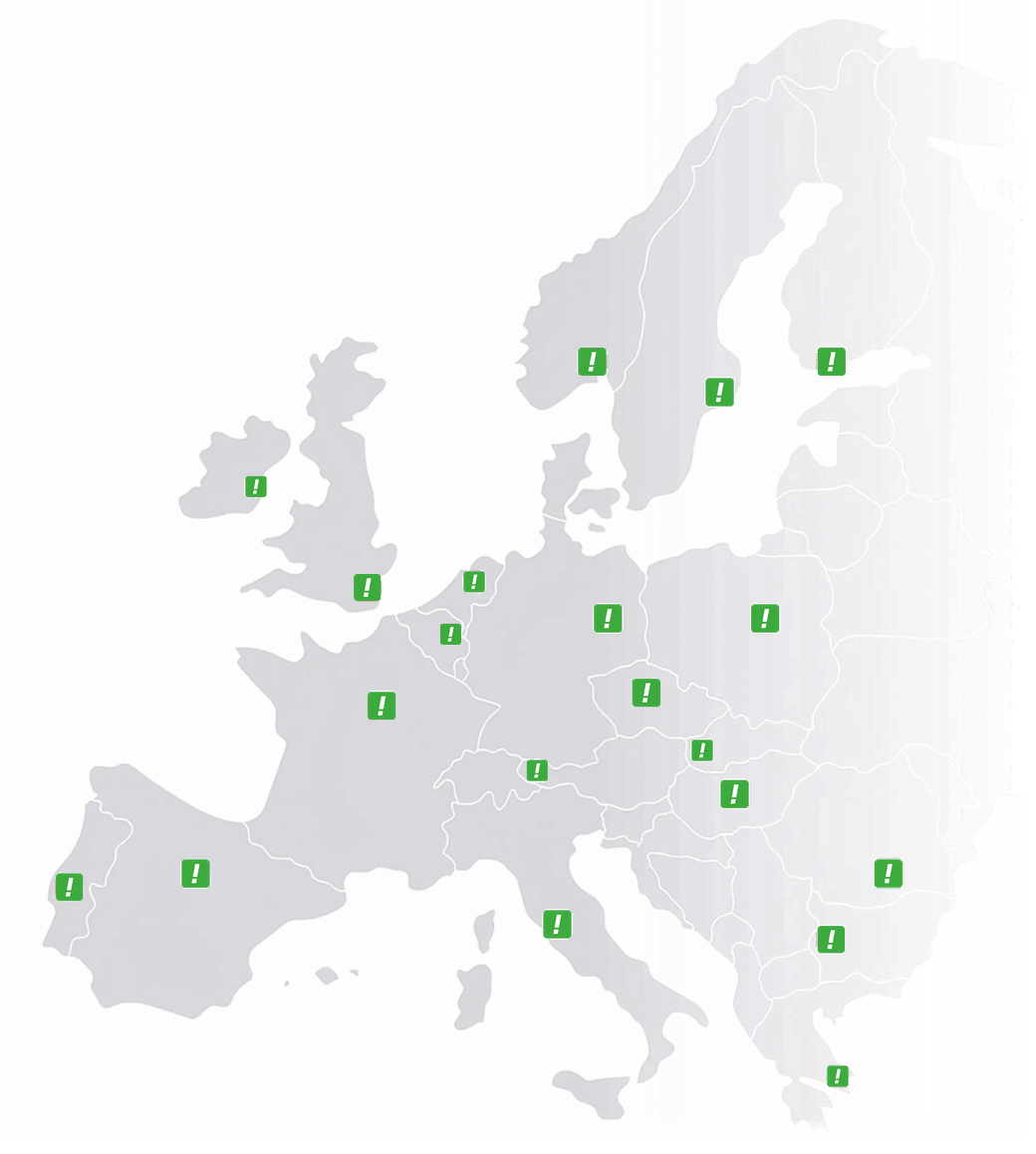
When someone in France dials your French number, the incoming call is carried to the destination you have named, whether that is a desk phone, a softphone, a mobile, or a team queue in another country. Your customer dials a French number, while the answering happens wherever your staff are based. CallFactory carries these calls over a premium fixed-network routing path rather than the cheapest available internet route, so audio quality and connection reliability hold up for the kind of business conversations where a dropped or garbled call costs you credibility. CallFactory is also a licensed telecom provider in 15 countries running its own intelligent IVR platform, which means your support requests are handled by the team that runs the platform. ## What ARCEP requires to register a French number France regulates its numbering through ARCEP, the national telecom authority, which applies a territorial link, the lien territorial, to geographic +33 numbers. The principle is traceability, so that the regulator and emergency services can identify who holds a number and where the registered subscriber sits. In practice this means a French number is registered to a French establishment. You provide a French address, an extrait Kbis, which is the French company registration certificate, and a SIRET number that identifies the establishment.
This shapes who a French number suits. A company that is registered in France, or that operates a French establishment, can supply those documents and then route calls from the number to a team in any country, so the staff answering do not have to sit in France. A company with no French registration cannot meet the requirement, which is the honest limit of the rule. Once the French address, Kbis extract, and SIRET are in place, CallFactory files them in the format French telecom law requires and stores the subscriber data as the operator, producing it on request, so the regulatory side is handled for you.
How to order a French number through CallFactory
Ordering follows a short, defined path. You first choose your number, deciding between a nationwide French number and a zone-specific geographic number such as a Paris line in zone 1. You then send the registration documents that satisfy the territorial-link rule, namely a French address, an extrait Kbis, and a SIRET number, and CallFactory prepares the filing in the required French format. Finally you name the destination where calls should arrive, and the number goes live once the documents are complete, usually within 24 working hours.
From there you decide how calls are handled. Call forwarding [https://www.callfactory.co/features/call-forwarding/] delivers every inbound call to wherever your team works, so a French number can ring a sales desk in another country without the caller ever knowing. The text-to-speech assistant [https://www.callfactory.co/features/text-to-speech-assistant/] lets you place a French greeting in front of the line, which reinforces the local impression before a person even picks up. If you want a record of conversations for training or compliance, call recording [https://www.callfactory.co/features/call-recording/] captures them. These features are configured once and adjusted whenever your routing needs change.
Benefits for your business
The most immediate benefit is higher reachability. Because French customers dial a local number far more readily than a foreign one, the contact details on your website, ads, and directories turn more viewers into callers, while every inquiry that comes in lands with your own team. That single change touches sales, support, and service at the same time.
There are practical advantages behind the trust signal as well. With your French registration in place, the number gives you a local telephone presence without basing staff or telecom hardware in the country, because incoming calls reach your existing team while the caller experiences a domestic French line. Calls ride a premium fixed-network routing path, which means the voice quality your French contacts hear matches what they expect from a domestic supplier. CallFactory has been operating since 2001, giving you more than 25 years of experience behind the line, and as a licensed operator across 14 European countries it handles the same setup in other markets once France is working, so a single provider covers your European footprint. ## How to get started Getting started is a matter of choosing a number and sending your registration details. Decide whether a nationwide French number or a city-specific geographic number fits your market approach, gather your French address, extrait Kbis, and SIRET number, and CallFactory handles the territorial-link filing and activation from there. Once the number is live you point it at your chosen destination and add a French greeting if you want one, and your local presence in France is in place.
To begin, go to the French phone number page, select your number, and start the registration. Your French market sees a +33 number that reads as one of their own, while your team answers from wherever it already works. If France is one of several markets you plan to open, our international phone number guide compares local, national and toll-free options country by country.