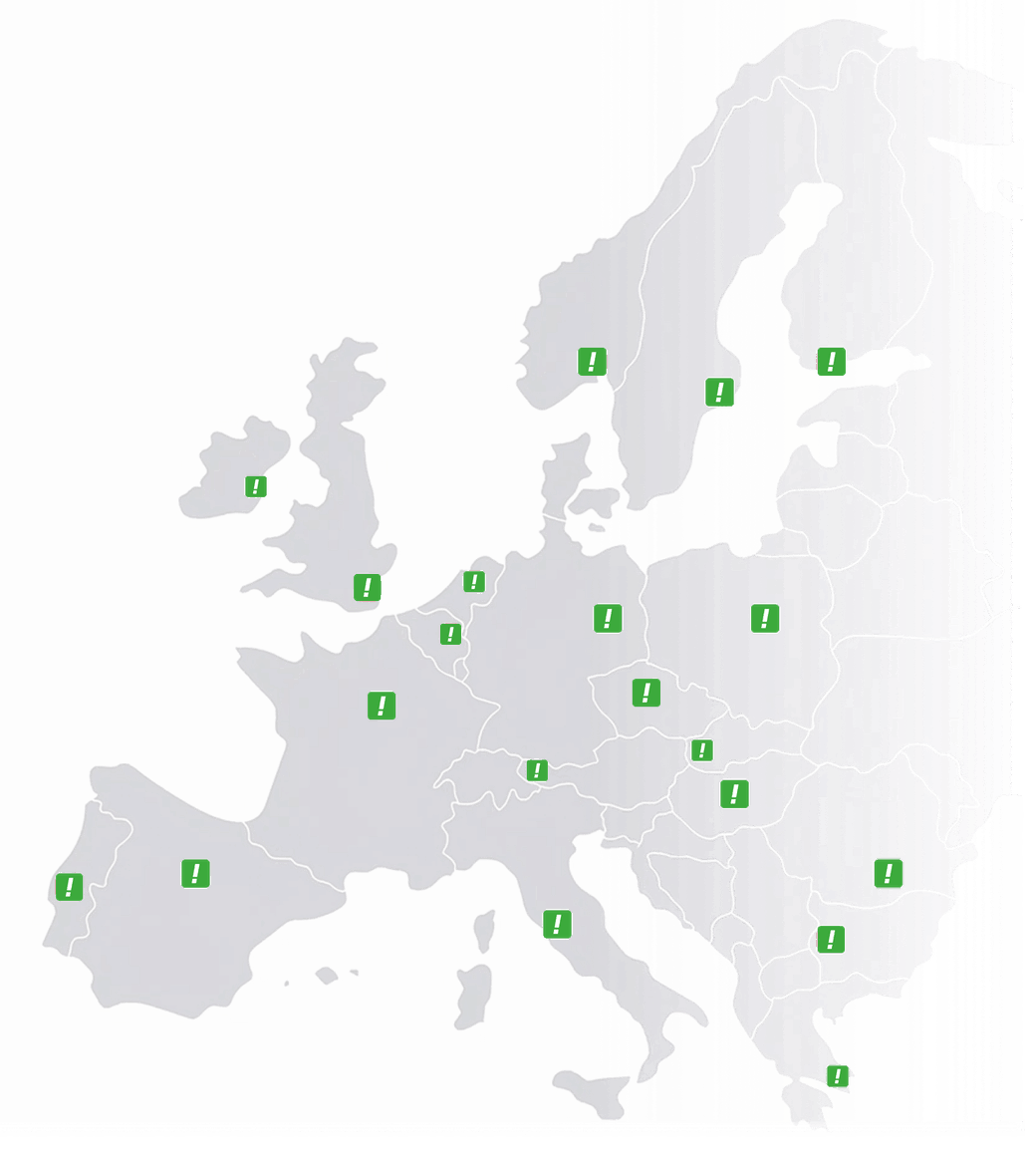
Netherlands
 Belgium
 Denmark
 Germany
 France
 United States
 Austria
 UK
 Spain
 Italy

Every business with a phone number reaches the point where someone calls and nobody is free to answer. The service technician is on a job, the front desk of a clinic is helping the patient in front of them, the founder of a small agency is in a meeting. A caller who reaches voicemail often hangs up and calls the next company on the list. An answering service exists to close that gap: it answers phone calls in your company name whenever your own team cannot.
There are two ways to do that today. An outsourced answering service uses people, often called virtual receptionists, who work for an outside company and answer calls for many businesses at once. An AI answering service uses a voicebot that answers on your own number, understands what the caller says and either helps them or puts the call through. This article explains how both work, what they cost and which one suits which kind of business. We do not run a human answering service ourselves: we build and run the voicebot, so we describe the human model in general terms.
What an answering service does
At its core, an answering service answers inbound calls to your existing business number on your behalf, with a greeting and a script built around your company. Routine questions, such as opening hours, the address or whether you are taking new clients, are answered directly. A call that needs your team is either put through to the right person or ends with a message that contains the caller details: name, phone number and the reason for the call.
The value shows most clearly outside business hours. Evenings, weekends and lunch breaks are when a shared office phone goes unanswered, and those are the moments prospective customers try someone else. Good call answering removes that gap without asking a colleague to take the phone home.
How a human answering service works
A human answering service is a team of operators, usually in a shared office, who answer calls for many client businesses. You forward your number to the service, give them a script and a list of who to contact for what, and the operator answers with your business name. After the call, the operator sends a call summary by email or message, or transfers the caller to you when you are available.
Some answering services specialize in one industry, such as law firms, medical practices or real estate agents. A specialty answering service knows the vocabulary and the usual questions of that industry, which helps with customer intake. Others work as general call center services for any small business. In both cases a real person is on the line, which some callers prefer, especially for sensitive or emotional calls.
The limits of a human service come from the same fact. An operator answers one call at a time, so at peak demand callers may wait or hear a busy signal. Operators handle calls for many companies, so they know your business only as far as the script goes. And because the work is done by people, the cost grows with your call volume.
How an AI answering service works
An AI answering service, sometimes called an AI receptionist, does the same job with software. The caller speaks in their own words, speech recognition turns that into text, a language model works out what the caller wants and what to answer, and a synthetic voice speaks the answer back. The voicebot can answer questions, take the details of a request and connect the caller to a colleague.
At CallFactory the AI answering service is our AI voicebot. It runs on our own platform as one of the destinations in your call routing, next to your colleagues, your call queue and your voicemail. That means it can answer every call, only calls outside business hours, or only calls your team does not pick up within a set number of rings. When a call needs a person, the voicebot hands it to a colleague on their own mobile or landline, with what the caller has already said, so the caller does not have to start again.
Our virtual receptionist is the same voicebot in its simplest role. It asks what the caller needs and puts them through to the right person or team. We set it up for you; you do not have to build it yourself in the dashboard.
Answering service vs voicebot: the key differences
Both models answer calls in your company name, so the caller never reaches a dead line. The differences are in how they handle volume, knowledge, languages and cost.
- Simultaneous calls. A human service answers as many calls at once as it has free operators. Our voicebot answers up to 50 simultaneous calls on one number, so at peak times every caller is answered right away.
- Knowledge of your business. An operator follows the script you provide. The voicebot works with the answers you give us and, if you want, looks up data in your own business systems, such as an appointment calendar or order status. Those integrations are quoted separately.
- Hours. Night and weekend cover from people is a staffing question. The voicebot answers at 3 AM the same way it answers at 10 AM, at the same rate.
- Languages. A human service offers the languages its operators speak. The voicebot speaks 99 languages, which helps a business with callers in several countries.
- The personal touch. Some callers want a real person, and some calls, such as a complaint or a difficult conversation, are better with one. The voicebot hands those calls to your team, so your human backup is your own colleagues.
What an answering service costs
A human answering service usually bills by the call, by the minute or with a monthly bundle of calls or minutes, and cover outside business hours often costs extra. Ask how the service counts a call, what happens when you go over the bundle and whether call forwarding to your own phone is billed separately, because those details decide the real monthly bill.
The answering service cost at CallFactory is built differently. The voicebot costs €49 a month plus €0.35 per minute it talks, billed per second, on top of the Phone System plan (€25 a month or €250 a year). There is no setup fee. Evenings, weekends and public holidays cost the same as a Tuesday morning, and there is no charge for the number of colleagues in your team. Prices exclude VAT. Our article on how much a voicebot costs works through an example for a business with a few hundred calls a month.
The comparison that matters most is not the monthly invoice but the inquiries that would otherwise disappear. A marketing budget that paid for a call is wasted the moment that call goes unanswered. Measured against those missed calls, either model usually earns back its monthly cost from a small number of extra customers.
Which one suits your business?
A human answering service is a good fit when most of your calls need empathy or judgment that you do not want to hand to software, when callers expect a person every time, or when your call volume is low and steady.
An AI voicebot is a good fit when many calls are routine questions, when calls arrive outside business hours, when callers speak several languages, or when call volume jumps during campaigns and busy seasons. Typical examples are a trades company that gets calls while everyone is on site, a clinic that closes at six, or a sales team that wants to qualify leads and schedule appointments in the evening. The voicebot can collect the details of a request and, with a calendar integration, book appointments directly, so your team starts the next day with a list instead of a pile of voicemails.
Many businesses combine the two: their own team answers during core hours, the voicebot answers when everyone is busy or the office is closed, and calls that need a person are put through to a colleague on duty.
When an answering service is not enough
A small business usually outgrows informal call cover in a few clear steps. Calls go to voicemail during business hours, customers mention that they called twice before getting through, or a colleague’s real job is interrupted several times a day by the general line. A marketing campaign, a busy season or a second location often pushes call volume past what a shared mobile can handle.
There is also a quieter version of the same problem: calls are answered, but not consistently, because whoever picks up gives a different answer to the same question. An answering service, human or AI, makes the answers the same on every call. With a voicebot, the answers stay the same whether it is the first call of the day or the fortieth, and you can follow incoming and missed calls in the dashboard statistics.
Call quality and our own platform
An answering service is only as reliable as the line it runs on. We forward calls over the fixed and mobile phone network, never over the internet, so the line stays clear enough for accurate call handling, which matters most when software has to understand what the caller says. CallFactory has worked in business telephony since 2001, is a licensed operator in 14 European countries and runs its own platform, so a change or a fault is handled by the people who operate the voicebot and the phone system.
How to get started
You do not need a new number. You forward your existing number to the voicebot, all the time or only when nobody answers, or you choose a new local, national or toll-free number from us. You tell us the questions callers ask most often, the right answers, your business hours and when a colleague should take over. We build the voicebot, you call it yourself to test it, and we adjust what is not right. It is usually live within two business days.
After that, you change your business hours and routing in the dashboard, and we update the voicebot’s answers when your services change. Compare the plans on our pricing page or read how a voicebot compares with an IVR menu if you are deciding how calls should be routed.